The electric two-wheeler market in India has crossed the threshold from niche adoption to mainstream purchase behaviour. More than a million electric scooters and motorcycles are sold every year, prices have fallen substantially, charging infrastructure has expanded, and state government subsidies under various EV promotion schemes have made the effective purchase cost competitive with comparable petrol-powered alternatives.
For buyers who want to acquire an EV two-wheeler without any upfront capital — relying entirely on loan financing — 2026 presents a more accessible landscape than any previous year. Several lenders, including banks, NBFCs, and manufacturer-linked finance arms, are offering zero down payment or near-zero down payment schemes specifically for electric vehicles. Here is how to access them correctly.
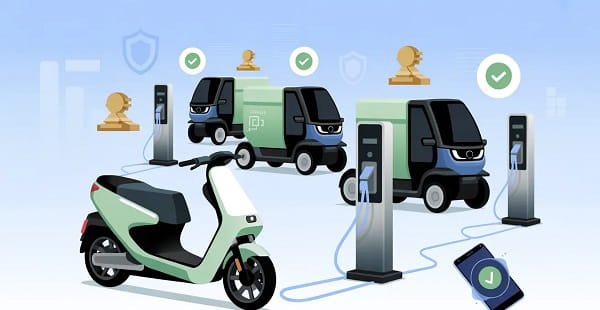
Why 100% Financing Is More Available for EVs Than Conventional Vehicles
Lenders typically finance 75% to 85% of a vehicle’s on-road price, requiring the buyer to contribute the remaining 15% to 25% as a down payment. For electric scooters, the calculus has shifted because of three converging factors.
Government subsidy structures under FAME II and state-level EV schemes reduce the effective vehicle cost, making the loan-to-value ratio safer for lenders even at higher financing percentages. Manufacturer-linked finance companies — Ola Finance, Ather’s finance partners, TVS Credit, Bajaj Auto Finance — are willing to offer full on-road price financing as a distribution strategy, absorbing some of the risk to drive volume for their parent or partner brands. And the second-hand value of popular EV models has stabilised sufficiently for lenders to feel comfortable with higher LTVs than in the EV segment’s early years.
Identifying Lenders and Schemes Offering Zero Down Payment
Manufacturer Finance Arms: The most consistently available 100% financing offers come from finance companies linked to EV manufacturers or their dealer networks. Ola Financial Services, Hero Fin Corp for Hero Electric products, TVS Credit for TVS iQube, and Bajaj Auto Finance for Chetak Electric routinely offer full on-road financing for creditworthy buyers with no required down payment. These offers are periodically available as launch promotions or as standing schemes for applicants above a defined CIBIL threshold.
NBFC Direct Schemes: Bajaj Finance, Tata Capital, Mahindra Finance, and Hero FinCorp have dedicated EV two-wheeler loan products. Several of these explicitly offer 100% on-road financing or cover on-road costs including registration, insurance, and accessories within the loan amount — effectively eliminating the buyer’s upfront cash requirement entirely.
Public Sector Bank EV Loan Products: State Bank of India, Bank of Baroda, and Canara Bank have introduced dedicated EV loan schemes — partly driven by government directives to support green mobility adoption — that offer financing for the full ex-showroom price in some cases, with registration and insurance to be paid separately or included depending on the specific scheme.
Eligibility Requirements for Zero Down Payment Offers
The higher the loan-to-value ratio, the more important the borrower’s creditworthiness to the lender. Zero down payment EV loans are consistently available to borrowers who meet the following profile.
CIBIL score of 700 or above is the most common minimum threshold, with scores above 750 accessing the most competitive terms. Stable employment with at least one year of continuous tenure at the current employer is typically required for salaried applicants. Self-employed applicants need at least two years of business vintage with documented income through ITR filings or bank statements. The total EMI obligation — including the proposed EV loan — should not exceed 50% of monthly net income.
Buyers who meet these criteria at manufacturer-linked finance arms have the strongest access to zero down payment terms. Those with borderline credit profiles may be required to contribute a 5% to 10% margin rather than the full zero-down offer.
The On-Road Price Versus Ex-Showroom Price Distinction
100% on-road financing is more comprehensive than 100% ex-showroom financing and the distinction matters significantly. Ex-showroom price covers only the vehicle itself. On-road price adds registration charges, road tax, insurance premium, and accessories — which can collectively add ₹8,000 to ₹25,000 to the ex-showroom cost depending on the vehicle category and state.
A loan advertised as covering the ex-showroom price at zero down payment still requires the buyer to arrange registration, insurance, and tax payments — typically ₹10,000 to ₹20,000 — from their own pocket. A genuine 100% on-road financing scheme covers all of these. Confirm this distinction explicitly with the dealer or finance company before signing any agreement.
FAME Subsidy and State Incentive Interaction With the Loan Amount
Under the FAME II scheme and state subsidy programmes, eligible electric scooters receive point-of-sale price deductions — the subsidy is applied directly to the invoice before financing is calculated. This means the loan amount is on the post-subsidy price rather than the gross manufacturer price, which reduces your EMI and total interest cost even when financing 100% of the effective on-road price.
Confirm with the dealer that the subsidy has been correctly applied to the invoice before the loan is structured — some dealers process the subsidy separately from the loan, which can create confusion about the actual financed amount.
Frequently Asked Questions (FAQs)
Q1. What interest rates should I expect on a 100% finance EV scooter loan in 2026?
A: Zero down payment EV loans carry slightly higher interest rates than standard vehicle loans with a down payment component — typically ranging from 9.5% to 15% per annum depending on the lender, borrower credit profile, and specific scheme. Manufacturer-linked finance arms often offer subsidised rates — sometimes as low as 7% to 8% — as promotional offers for specific models. Compare the effective interest rate across at least two to three lenders before committing, as the rate difference on a ₹1.5 lakh loan over three years can amount to ₹6,000 to ₹12,000 in total interest.
Q2. Can a student or first-time earner with limited credit history get 100% EV financing?
A: Students with no credit history have limited standalone access to 100% EV financing. A co-applicant — parent or guardian — with established income and credit history significantly improves approval probability. Some NBFCs specifically offer EV two-wheeler loans to first-time borrowers at slightly higher rates with a co-applicant requirement rather than a down payment requirement, making the zero-upfront-cash objective achievable with the right co-borrower structure.
Q3. Does the GST component get included in 100% on-road financing?
A: GST is embedded in the ex-showroom price of the vehicle and is not a separate charge — it is part of the quoted vehicle price. The separate charges added to arrive at the on-road price — registration, road tax, and insurance — are over and above the GST-inclusive ex-showroom price. A genuine on-road financing scheme includes all of these charges. Insurance premium is typically included in comprehensive EV loan packages since lenders require insurance as a loan condition.
Q4. If I prepay the EV loan early, is there a prepayment penalty?
A: For floating rate vehicle loans, RBI guidelines prohibit prepayment penalties for individual borrowers. For fixed-rate EV loans — which most short-tenure vehicle loans are — prepayment charges of 2% to 5% of the outstanding principal may apply after an initial lock-in period of six to twelve months. Bajaj Finance and some NBFCs specify zero prepayment charges after the lock-in period for EV loans as part of their green mobility promotion positioning. Confirm the prepayment terms before signing the loan agreement.
Q5. Can I claim income tax benefits on an EV two-wheeler loan?
A: Yes. Section 80EEB of the Income Tax Act provides a deduction of up to ₹1.5 lakh on interest paid on loans taken to purchase an electric vehicle. This deduction is available to individual taxpayers — not companies or firms — on loans sanctioned between April 2019 and March 2023 originally, and the scheme has been extended in subsequent budgets. Confirm the current applicability of Section 80EEB for loans sanctioned in the current financial year with your CA, as budget amendments may have modified the eligibility window.