Andhra Pradesh’s real estate market has been through a decade of extraordinary turbulence — the state’s bifurcation in 2014, the protracted dispute over which city would serve as its capital, and years of policy uncertainty that suppressed both developer confidence and buyer sentiment. By 2026, that chapter is definitively closing. With Amaravati firmly re-established as the state capital under the current government’s mandate, Visakhapatnam accelerating as the state’s economic and industrial engine, and a string of smaller cities from Tirupati to Kurnool emerging as genuine investment destinations on the back of industrial policy and infrastructure investment, Andhra Pradesh has transformed from a market buyers were cautious about to one they are actively competing to enter. Land values in key corridors have appreciated 15 to 20 percent over the last two years alone, and the trajectory in 2026 continues upward across both industrial and residential segments.
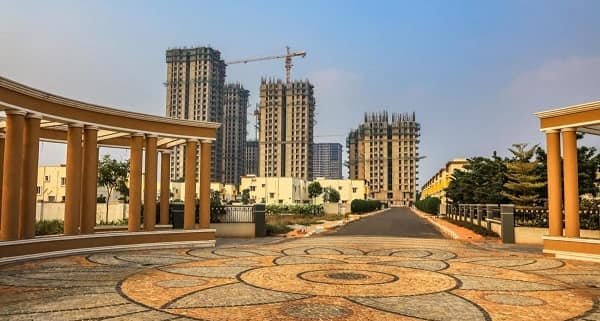
Amaravati: The Capital City Opportunity
Amaravati is the most talked-about real estate story in Andhra Pradesh in 2026, and with good reason. Located in the Guntur district along the banks of the Krishna River, the planned capital city has been under development since its master plan was unveiled nearly a decade ago. After years of stalled construction during the previous government’s tenure, the current state administration has decisively recommitted to making Amaravati the political, administrative, and judicial capital — resuming stalled construction, fast-tracking government complex development, and inviting institutional investment into the planned zones.
For real estate buyers, Amaravati represents a rare opportunity: a new planned city with world-class master plan ambitions, government backing, and prices that — while already rising significantly from their trough — remain a fraction of equivalent locations in Hyderabad, Bengaluru, or Pune. Residential zones within the capital area are attracting plots, villa developments, and apartment projects targeting government employees, professionals, and investors who anticipate the gravity of the capital will drive ten to fifteen years of sustained appreciation. Areas closer to the seed access roads, the government complexes under construction, and the riverfront development zones are commanding the strongest premiums within the master plan area.
The critical due diligence for Amaravati investments involves verifying land allotment status, confirming that plots or projects fall within the CRDA (Capital Region Development Authority) approved zones, and ensuring RERA Andhra Pradesh registration for any built residential project. Land pooling scheme areas require additional legal verification to confirm the completion of ownership transfer documentation.
Visakhapatnam: The Economic and Industrial Powerhouse
If Amaravati is the speculative long-term capital play, Visakhapatnam is the fundamentals-backed economic engine that no serious investor in Andhra Pradesh should overlook. Vizag is already Andhra Pradesh’s largest city, its biggest contributor to state GDP, home to one of India’s busiest major ports, and the hub of a rapidly expanding industrial and IT ecosystem. In 2026, the city’s residential market is projected to grow 6 to 10 percent — conservative by the state’s own bullish projections — driven by a combination of large-scale industrial investments and infrastructure catalysts.
The single most transformative project for Vizag’s real estate market is the Alluri Sitarama Raju Bhogapuram International Airport, expected to be operationally ready by mid-2026. Located approximately 40 kilometres north of the city centre, the airport has triggered a land value boom along the Vizag-Bhogapuram corridor that is one of the most dramatic appreciation stories in South Indian real estate right now. Areas like Madhurawada, Kommadi, Paradesipalem, Boyapalem, and Anandapuram in North Vizag are already experiencing strong demand from IT employees, industrial workers, and investors positioning for the airport’s multiplier effect on the surrounding economy.
Additionally, Google’s announcement of a data centre investment near Vizag, Cognizant’s continued expansion, and the Visakhapatnam-Chennai Industrial Corridor — a dedicated industrial infrastructure zone spanning Vizag’s southern periphery — are collectively creating the kind of employment density that sustains residential real estate demand for decades. Rental demand from the industrial and IT workforce is supporting yields in the 3.5 to 5 percent range across well-located residential assets.
Tirupati: Pilgrimage Economy Meets Industrial Investment
Tirupati is one of India’s most visited cities by virtue of the Tirumala Venkateswara Temple — one of the world’s richest and most-visited religious institutions drawing tens of millions of pilgrims annually. This permanent, year-round visitor economy has always supported hospitality and commercial real estate. What is new in 2026 is the overlay of industrial investment that is transforming Tirupati from a pilgrimage destination into a multi-sectoral economic hub.
The Sri City Special Economic Zone near Tirupati is one of India’s most successful integrated industrial townships, hosting over 200 global companies from Japan, South Korea, the US, and Europe in manufacturing across electronics, automotive components, food processing, and pharmaceuticals. Sri City has generated significant residential demand in Tirupati and its surrounding areas from the multinational workforce and their support ecosystem. Residential projects in localities close to Sri City and along the national highways connecting Tirupati to Chennai have been among the strongest performers in the region.
The upcoming Tirupati Greenfield International Airport — with expanded international connectivity — is another catalyst that will broaden the city’s economic base and strengthen real estate demand from investors and end-users alike.
Kakinada, Nellore, Kurnool, and Guntur: The Second-Tier Opportunity
Beyond the headline markets, Andhra Pradesh’s second-tier cities present compelling risk-adjusted opportunities for investors with longer time horizons and appetite for ground-floor entry pricing.
Kakinada is a major port city and a critical node in India’s eastern offshore oil and gas sector. Industrial demand from energy sector professionals and ancillary businesses drives consistent residential absorption in areas like Sarpavaram and Vakalapudi. Nellore, positioned strategically between Vijayawada and Chennai with strong road and rail connectivity, is emerging as a logistics and industrial services hub as supply chain infrastructure builds out along the AP-Tamil Nadu corridor. Kurnool has been identified as a sub-capital city and is developing its own industrial park and SEZ ecosystem that is beginning to attract manufacturing investment. Guntur, the state’s agricultural trading capital and a city in close proximity to Amaravati, is seeing spill-over residential demand from the capital’s development that benefits buyers seeking Amaravati-linked appreciation at lower price points.
AP RERA: Buyer Verification Before Any Investment
Every real estate investment in Andhra Pradesh must begin with verification on the AP RERA portal at rera.ap.gov.in. The state’s regulatory authority requires mandatory registration for all qualifying projects, and the portal’s search function allows buyers to confirm registration status, access the approved project layout, and review the developer’s compliance record before committing any funds. Given Andhra Pradesh’s history of land disputes and the complexity of capital city land pooling schemes, independent legal due diligence — title verification, encumbrance certificate review, and CRDA/municipal approval confirmation — is not optional. It is the foundational step in what promises to be one of India’s most rewarding regional real estate markets through the rest of this decade.
FAQs
Q: Is Amaravati a good investment in 2026?
A: — with the capital’s development firmly back on track under the current state government and infrastructure construction accelerating, Amaravati offers significant long-term appreciation potential, though buyers must verify CRDA-approved zones and RERA registration carefully before purchasing.
Q: Which area of Visakhapatnam is appreciating fastest in 2026?
A: North Vizag — particularly the corridor from Madhurawada and Kommadi through to Bhogapuram near the upcoming international airport — is recording the strongest appreciation, with buyer demand driven by IT expansion, industrial employment, and airport-linked infrastructure investment.
Q: What industrial developments are driving Tirupati’s real estate market?
A: The Sri City Special Economic Zone hosting 200-plus global manufacturing companies, the expanding export processing zones, and the upcoming Tirupati Greenfield International Airport are collectively making Tirupati one of Andhra Pradesh’s most dynamic industrial-residential markets.
Q: How does the AP RERA portal protect buyers in Andhra Pradesh?
A: The official AP RERA portal at rera.ap.gov.in allows buyers to verify project registration, check completion timelines, review developer compliance records, and confirm the 70 percent escrow rule compliance — providing legally backed transparency before any payment is made.
Q: Are open plots a good investment in Andhra Pradesh?
A: Yes — open plots in CRDA-approved zones near Amaravati and in HMDA-regulated corridors near Vizag are among the most favoured investment instruments for AP buyers, offering flexibility, lower maintenance costs, and strong appreciation linked to infrastructure development without the delivery risk of under-construction projects.