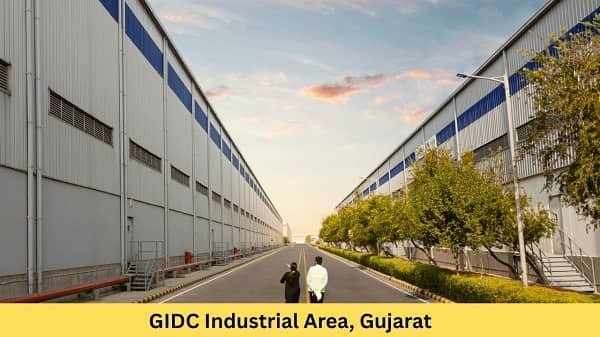
GIDC Industrial Area refers to a large network of industrial estates developed across Gujarat by the Gujarat Industrial Development Corporation (GIDC). These industrial zones are spread across key cities such as Ahmedabad, Vadodara, Surat, Vapi, Ankleshwar, and Rajkot, forming the backbone of Gujarat’s industrial strength.
Established to promote organized industrial growth, GIDC has developed hundreds of industrial estates catering to a wide range of industries. These areas are known for their planned infrastructure, sector-specific clusters, and strong industrial ecosystem.
With world-class facilities and strategic locations, GIDC Industrial Areas play a major role in making Gujarat one of India’s most industrialized states.
GIDC Industrial Area, Gujarat — Quick Overview
| Category | Details |
| Location | Across Gujarat (Multiple Cities) |
| Industrial Estate | GIDC Industrial Areas |
| Major Regions | Vapi, Ankleshwar, Vatva, Sachin, Rajkot |
| Major Industries | Chemicals, Pharmaceuticals, Textiles, Engineering |
| Key Highways | NH-48, NH-8, State Highways |
| Nearest Ports | Kandla Port, Mundra Port, Hazira Port |
| Nearby Airports | Ahmedabad, Surat, Vadodara Airports |
| Managing Authority | GIDC |
| Industrial Structure | MSME + Large Industries |
Industrial Ecosystem and Key Sectors
GIDC Industrial Areas host one of the most diverse industrial ecosystems in India. Different estates specialize in different sectors, creating strong industrial clusters.
For example, Ankleshwar and Vapi are known for chemical and pharmaceutical industries, while Surat and Sachin focus on textiles. Rajkot and Ahmedabad host engineering and manufacturing industries.
Many export-oriented units operate within GIDC estates, contributing significantly to India’s global trade.
Other industries operating within GIDC Industrial Areas include:
- Chemical and pharmaceutical industries
- Textile and garment manufacturing
- Engineering and machinery production
- Plastic and packaging industries
- Food processing and agro-based industries
- Automobile and component manufacturing
This sector-specific clustering makes GIDC highly efficient and competitive.
Location and Connectivity
GIDC Industrial Areas benefit from excellent connectivity across Gujarat and India.
Most estates are located along major highways such as NH-48 (Delhi–Mumbai Industrial Corridor), ensuring smooth transportation of goods.
Gujarat’s strong port network—including Kandla, Mundra, and Hazira ports—provides a major advantage for export-oriented industries.
Rail connectivity is well developed across industrial cities, while air connectivity is available through major airports like Ahmedabad and Surat.
This multi-modal connectivity makes GIDC one of the best-connected industrial networks in India.
Infrastructure and Industrial Facilities
GIDC Industrial Areas are known for their planned and modern infrastructure.
The estates include:
- Industrial plots and factory units
- Sector-specific industrial parks
- Common effluent treatment plants (CETPs)
- Warehouses and logistics hubs
Basic utilities such as electricity, water supply, and drainage systems are well developed. Many estates also provide environmental infrastructure, especially for chemical industries.
GIDC continuously upgrades infrastructure to support industrial growth.
Residential and Social Infrastructure
GIDC Industrial Areas are supported by nearby cities and urban centers across Gujarat.
These areas provide:
- Housing options for workers and professionals
- Schools and educational institutions
- Hospitals and healthcare facilities
- Markets and commercial zones
Cities like Ahmedabad, Surat, and Vadodara offer strong social infrastructure, ensuring workforce availability.
Economic Importance
GIDC Industrial Areas play a crucial role in Gujarat’s economy.
They contribute to:
- Large-scale manufacturing and exports
- Employment generation across multiple sectors
- Development of industrial clusters and supply chains
Gujarat is one of India’s leading industrial states, and GIDC estates are a major reason behind this success.
Challenges and Industrial Issues
Despite their strengths, GIDC Industrial Areas face certain challenges.
Environmental concerns are significant, especially in chemical zones, requiring strict compliance and monitoring.
Rapid industrial growth increases demand for infrastructure and resources.
Traffic congestion and logistics management can be issues in high-density areas.
Authorities are actively working to address these challenges.
Future Growth Potential
The future of GIDC Industrial Areas looks extremely strong due to their strategic importance.
Key growth drivers include:
- Expansion of export-oriented industries
- Development of industrial corridors like DMIC
- Increasing investment in manufacturing and infrastructure
With continued government support, GIDC is expected to grow further as a global industrial hub.
Conclusion
GIDC Industrial Areas, Gujarat form one of the most powerful industrial networks in India. Their strategic location, advanced infrastructure, and diverse industrial ecosystem make them key drivers of economic growth.
While challenges related to sustainability and infrastructure remain, ongoing improvements indicate a strong future.
With continued expansion and investment, GIDC Industrial Areas are set to remain at the forefront of India’s industrial development.