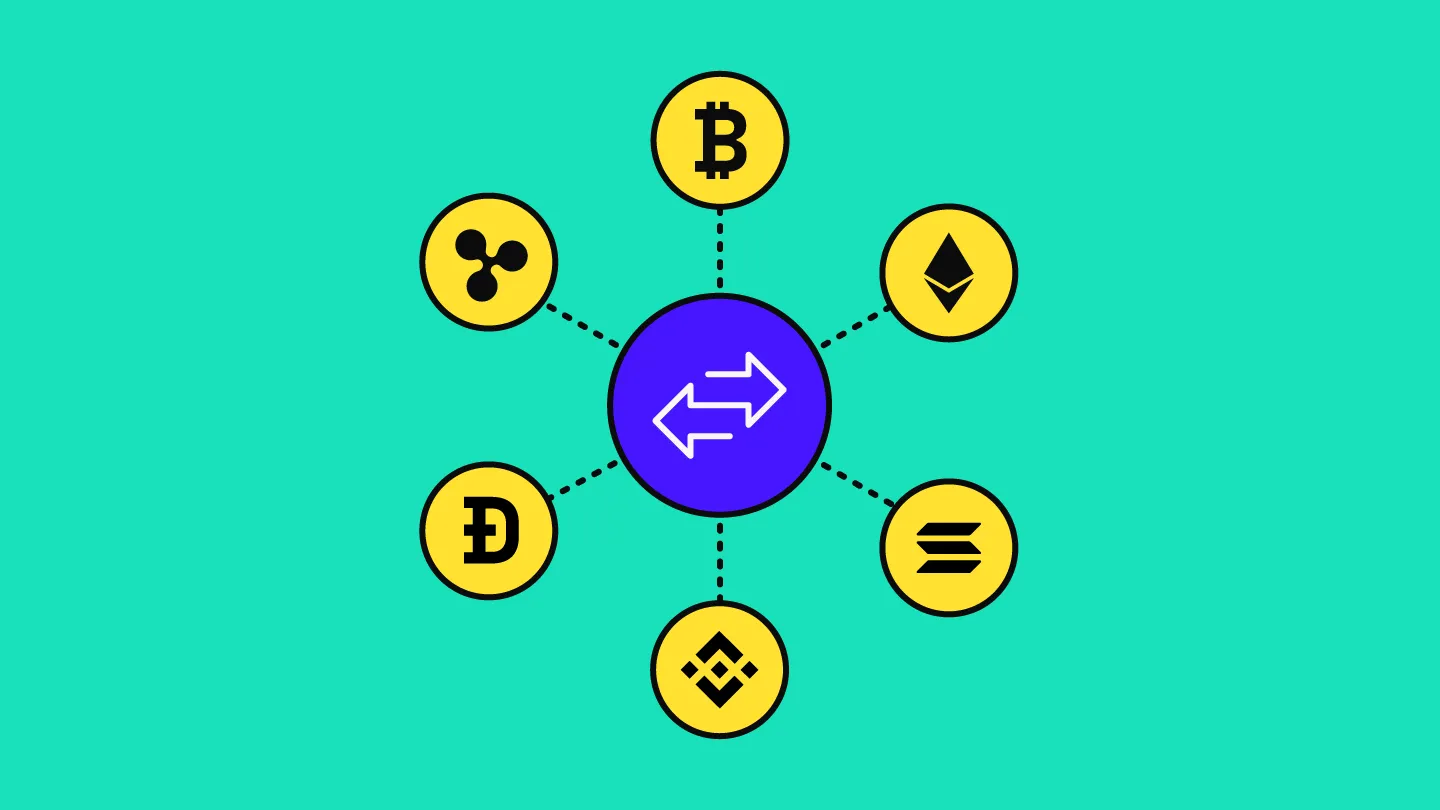
Digital asset infrastructure relies on a primary transactional venue: the crypto exchange. A crypto exchange operates as a specialised digital marketplace connecting buyers and sellers, enabling market participants to trade assets like Bitcoin (BTC), Ethereum (ETH), and Solana (SOL). Modern derivatives exchanges allow market participants to take directional leverage via specialised derivative contracts without holding underlying spot tokens.
Understanding exchange mechanics remains essential for managing execution slippage, platform security, and capital efficiency. Beginners should also weigh regulatory status and fund-handling practices before committing capital, since these vary widely across platforms.
Key Mechanics & Value Proposition
At its core, a crypto exchange matches buy and sell orders through an order book, executing incoming orders against existing limit orders. On specialised derivative trading venues like Pi42, trading architecture shifts away from traditional physical asset delivery toward direct financial settlement.
Here is how market entry works for a beginner:
- Account Setup & Regulatory Verification: Users register and complete KYC checks with a FIU-IND registered reporting entity, forming part of India’s AML and CFT compliance framework.
- Direct Fiat Onboarding: Traders deposit INR capital directly onto the platform through domestic payment rails such as UPI or IMPS.
- Order Book Mechanics: Orders (Market, Limit, Stop-Loss) flow straight into the exchange execution engine for automated counterparty matching. Execution speed and order-book depth influence how closely a filled price tracks the quoted price.
- INR-Margined Futures Contracts: On Pi42, INR contracts execute through Crypto-INR perpetual futures, meaning positions are margined and settled in Indian Rupees without requiring stablecoins like USDT.
Tactical Advantages & Operational Features
Navigating exchange mechanics requires evaluating operational friction, cost structures, and legal compliance. Pi42 restructures parts of traditional exchange infrastructure to address tax and wallet considerations for Indian market participants:
- Tax Treatment & TDS: Standard Virtual Digital Asset (VDA) spot trades attract a 30% tax on transfer income, along with 1% TDS on applicable transactions. Pi42 positions its derivative contracts as distinct from standard VDA provisions, though this treatment is not yet conclusively settled under Indian tax law. Depending on individual circumstances, traders may report derivative profits under business income slab rates, and Pi42’s INR contracts are structured to avoid the 1% TDS that applies to VDA transfers.
- Reduced Wallet Exposure: Settling contracts in native INR reduces reliance on self-custodied crypto wallets. Capital sits within Pi42’s INR Wallet rather than on-chain addresses, though this wallet is not RBI-regulated and carries its own platform-related risks.
- Capital Efficiency & Risk Management: Access up to 150x leverage on perpetual contracts along with risk controls like automated Stop-Loss (SL) and Take-Profit (TP) orders. Higher leverage also raises liquidation risk, so position sizing remains important.
- Avoiding USDT Conversion Costs: Direct INR margin avoids conversion spreads and rate fluctuations tied to USDT/INR movements during deposits or withdrawals.
Strategic Operational Takeaway
Selecting the right crypto exchange depends on capital protection, operational compliance, and tax awareness. For beginners entering the market, starting on a FIU-registered platform with transparent compliance practices, while considering INR settlement options, supports easier access to digital asset derivatives. Open a verified account, enforce strict stop-loss rules, and trade derivatives with disciplined capital management. Reviewing a platform’s own risk disclosures before trading remains a sensible habit for any beginner.