A paper trading account can show three profitable weeks, yet that short record tells very little about how a trading approach will perform when market conditions change. A strategy that works during a steady upward trend may struggle when prices move sideways or volatility increases.
This creates an important question for aspiring traders in India: how much simulated experience is enough before considering real-money transactions?
There is no universally reliable paper trading period. Several months of structured practice can provide a more meaningful learning record than a few successful sessions, but the number of days alone cannot establish readiness.
The more useful measure is whether someone understands the strategy, records decisions consistently, recognises its limitations, and can explain the risks involved.
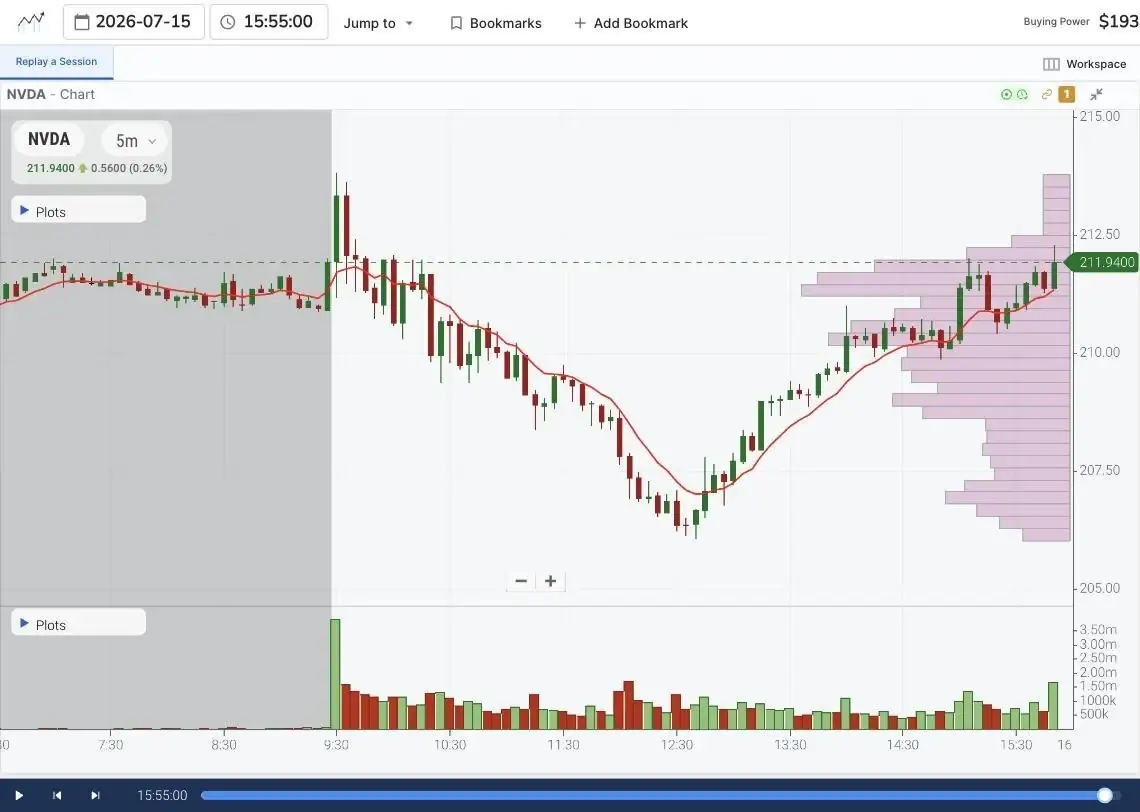
Why Counting Profitable Days Is Misleading
A beginner may complete 15 simulated trades and make a virtual profit on 12 of them.
That sounds encouraging, but the result is not necessarily evidence of a dependable strategy.
The market might have been moving strongly in one direction, making certain decisions appear easier than they would be under different conditions.
A small sample can also produce favourable outcomes through chance.
Instead of counting consecutive winning days, examine whether the trading approach has been observed under several market environments.
These may include:
- Rising markets with sustained buying interest.
- Falling markets with persistent selling pressure.
- Sideways sessions with limited price movement.
- Volatile periods involving sudden price changes.
- Sessions with relatively low trading activity.
A strategy does not need to perform profitably in every environment. Understanding where it struggles is part of the evaluation.
What Does a Reasonable Practice Period Look Like?
For educational planning, beginners sometimes use a three-to-six-month paper trading period as an initial observation window.
This is a practical learning benchmark, not a scientifically established minimum or a guarantee of readiness.
Someone studying longer-term strategies may need considerably more time because trading opportunities occur less frequently.
A person examining short-term market behaviour may collect more simulated observations, but frequent transactions do not automatically produce better evidence.
The appropriate period depends on the strategy’s holding duration, the number of meaningful observations, and the diversity of market conditions encountered.
Importantly, extending practice cannot eliminate the risks associated with real trading.
A Trading Journal Reveals More Than Virtual Profit
Suppose two learners each generate a simulated return of 8%.
The first records only entry prices and final profits.
The second documents the reasoning behind every decision, expected risks, execution assumptions, and mistakes.
Although their headline returns are identical, the second learner has gathered more useful information.
A detailed journal makes it possible to identify recurring problems.
For example, it may reveal that a strategy performs poorly during volatile sessions or depends heavily on unrealistic execution prices.
The journal should distinguish between decisions made according to predefined rules and those influenced by sudden changes in opinion.
This distinction helps evaluate the process rather than celebrating isolated outcomes.
Four Questions That Matter More Than the Calendar
Before treating simulated results as meaningful, consider four separate issues.
- Is the strategy clearly defined?
A trading approach should have understandable rules.
Vague instructions such as buying whenever a stock looks strong are difficult to evaluate consistently.
Clear conditions make it easier to determine whether simulated decisions followed the original plan.
- Are the results based on enough observations?
Ten simulated trades cannot reliably establish the long-term characteristics of a strategy.
Even a larger sample may be misleading if every transaction occurred under similar market conditions.
- Were realistic costs considered?
Indian securities transactions can involve brokerage, applicable taxes, exchange charges, and other expenses.
A simulation that ignores these costs may overstate results.
Slippage and liquidity constraints also matter, particularly for frequently traded or less liquid instruments.
- Can the learner explain the losses?
Understanding unsuccessful decisions is more valuable than simply recording their monetary impact.
Losses may arise from normal market uncertainty, unrealistic assumptions, or flaws in the underlying strategy.
These causes should not be treated as interchangeable.
The Problem With Switching Immediately After a Winning Streak
A profitable sequence can create the impression that a strategy has finally been mastered.
However, short-term success may reflect favourable market conditions rather than a lasting advantage.
Repeatedly changing strategies after losses creates another problem.
When the rules change continuously, earlier observations may no longer be relevant to the revised approach.
This makes meaningful evaluation difficult.
A more informative learning process examines a defined method consistently and documents changes separately.
What Paper Trading Cannot Teach Completely
Even a carefully maintained simulated account has limitations.
Paper trading does not reproduce the full emotional impact of losing real money.
It may also simplify order execution and overlook market impact.
These differences mean that strong simulated performance cannot establish that someone will achieve comparable results in a live account.
For Indian residents, legal eligibility is another consideration. Minors cannot independently access every securities trading facility, and permitted account arrangements are subject to guardian-related and regulatory restrictions.
Readiness therefore involves more than technical knowledge or virtual returns.
Frequently Asked Questions
Q1. Is one month of paper trading enough?
A: One month may help someone understand basic platform functions, but it usually provides limited evidence about how a strategy behaves across different market conditions.
Q2. Is three months of paper trading sufficient?
A: Three months can be a useful initial learning period, but it is not a universal requirement or proof of readiness. The quality and diversity of observations matter more than the calendar alone.
Q3. Should paper trading continue after several profitable weeks?
A: Profitable weeks do not establish consistent future performance. Further observation may reveal weaknesses that were not apparent during favourable market conditions.
Q4. Can someone become consistently profitable through paper trading?
A: A simulated strategy may produce consistent historical results, but those results do not guarantee real-world profitability because execution conditions, costs, and decision-making can differ.
Q5. What is the strongest sign that paper trading has been educationally useful?
A: The ability to explain trading decisions, identify recurring mistakes, understand execution limitations, and evaluate results without relying solely on profits is a meaningful indication of learning.