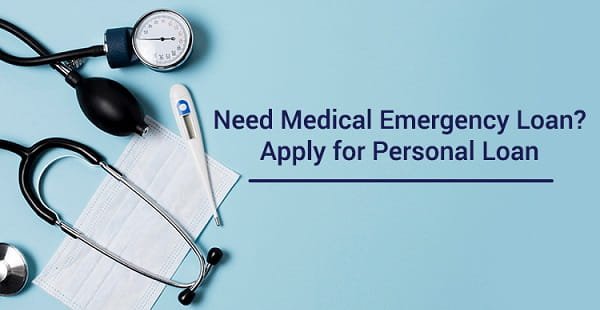
A medical emergency does not schedule itself around pay cycle timing, employment stability, or documentation readiness. The hospital needs a deposit. The procedure cannot wait. And somewhere between the ICU and the billing desk, the financial reality arrives that you need a significant sum immediately, that you may not have salary slips, and that the conventional personal loan process with its income verification requirements seems designed for exactly the opposite of this situation.
The good news is that the lending landscape in India has evolved substantially in this specific direction. Multiple products and channels exist for accessing emergency medical credit without salary documentation — some of them faster than a bank transfer, all of them more accessible than most people in crisis realise.
Why Salary Slips Are Required in Standard Loans and How to Work Around It
Salary slips exist in the loan application process as income verification — they tell the lender you have a regular, predictable income from which the EMI will be paid. Without them, the lender needs an alternative income signal that provides equivalent repayment confidence.
Several alternatives exist and each opens a different lending channel.
Bank Statement-Based Assessment: The most universally accepted alternative to salary slips is six to twelve months of bank statements. Regular credit entries — whether from salary, business income, consulting fees, or rental receipts — establish an income pattern that NBFCs and fintech lenders use instead of formal salary documentation. Your bank statements are accessible immediately from your bank’s app or netbanking portal and require no employer involvement.
Income Tax Returns: Your last two to three years of ITR filings establish income over a longer period and are particularly credible evidence for self-employed individuals, business owners, and professionals whose income structure doesn’t produce salary slips. ITR acknowledgements are downloadable from the income tax portal within minutes.
Existing Banking Relationship: If you hold a salary account with a bank — even if your current employment has changed and you cannot produce recent salary slips — your existing bank has direct visibility into your account behaviour over the history of the relationship. Pre-approved loan offers in banking apps are assessed on this account behaviour rather than on documentation. Many people in employment transitions or informal employment find that their own bank will approve a personal loan against demonstrated cash flow history when formal salary slips aren’t available.
The Fastest Channels for Emergency Medical Credit
Medical Loan Products From Healthcare-Aligned NBFCs: Bajaj Finserv has partnerships with thousands of hospitals across India that allow patients to access EMI financing at the hospital’s billing desk with minimal documentation — sometimes only Aadhaar and PAN. The application is processed and approval given within minutes, directly enabling the hospital deposit or procedure payment. Similar on-site medical financing is available through MedPay, Vivifi India, and several hospital-specific finance arrangements with local NBFCs.
Loan Against Fixed Deposit: If you or a family member holds a fixed deposit at any bank, a loan against it disburses in minutes — often within the same branch visit — with no income proof, no salary slip, and no credit score requirement. Up to 90% of the FD value is available as credit at 1% to 2% above the FD rate. For a medical emergency, this is the fastest and cheapest credit available if an FD exists.
Gold Loan: A Muthoot or Manappuram branch — of which there are thousands across India including in smaller towns — can disburse a gold loan within thirty to sixty minutes of walking in with gold jewellery. No income proof. No salary slip. No credit check. The gold is the only security required.
Credit Card Cash Advance or EMI: If a credit card is available, a cash advance or the conversion of a large medical bill into EMIs through the card’s EMI facility provides immediate access to funds. The interest rate is higher than a personal loan but lower than informal borrowing, and the credit limit availability is known in advance.
Fintech Platforms for Borrowers Without Formal Income Documentation
Platforms like KreditBee, Navi, EarlySalary, and MoneyTap assess creditworthiness through alternative data — Aadhaar verification, PAN-linked credit bureau data, and bank statement analysis — without requiring employer-issued salary slips. Applications are digital, approvals take minutes to hours, and disbursement occurs within the same day for approved applicants.
These platforms are appropriate for medical emergencies when the amount needed is within ₹50,000 to ₹3 lakh. For larger amounts, secured options — FD loan, gold loan, or LAP — are more accessible without salary documentation.
Frequently Asked Questions (FAQs)
Q1. My employer is a small business and doesn’t issue formal salary slips. What alternative documentation will lenders accept?
A: An employment letter on the company’s letterhead confirming your designation, tenure, and monthly salary — signed by the employer or HR representative — is widely accepted by NBFCs as an alternative to a standardised salary slip. Combined with six months of bank statements showing regular salary credits, this package adequately addresses the income verification requirement for most digital personal loan platforms.
Q2. Can I get a medical emergency loan if I have a low or no CIBIL score?
A: A thin file — no CIBIL score — is different from a poor CIBIL score and is treated more favourably by most lenders. For genuine no-score borrowers, secured options such as gold loans and FD loans are available with zero credit score consideration. Among unsecured lenders, some fintech platforms extend small emergency loans to thin-file borrowers at higher rates as a first credit-building transaction. A genuinely poor score below 600 significantly limits unsecured options and makes secured alternatives the practical primary route.
Q3. Does applying for a medical emergency loan affect my CIBIL score?
A: The loan application generates a hard inquiry on your credit report, which may reduce your score marginally — typically five to ten points. The loan itself, once disbursed, appears as an active credit account. On-time repayment improves your score over subsequent months. The short-term marginal score impact of a single emergency loan application is not a meaningful reason to avoid it when a genuine medical need exists.
Q4. Are hospital-based EMI financing schemes genuinely safe?
A: Hospital-based financing through regulated NBFCs — Bajaj Finserv Health EMI Network being the most established — is as safe as any NBFC lending product. The loan agreement is with the NBFC, not with the hospital. Confirm the NBFC’s RBI registration before signing and read the interest rate disclosure. The convenience of on-site financing is genuine and the regulatory structure is the same as any NBFC personal loan.
Q5. What is the maximum amount I can typically access through an emergency medical personal loan without salary slips?
A: Without formal income documentation, practical unsecured limits through fintech platforms range from ₹50,000 to ₹2 lakh for most borrowers, subject to credit bureau assessment. Gold loans can extend to 75% of gold value — potentially ₹5 lakh or more for substantial gold holdings. FD loans extend to 90% of the deposit value with no upper ceiling beyond the FD’s size. For medical emergencies above ₹5 lakh, a Loan Against Property through a cooperating family member’s property — if available and documentation can be arranged — is the most structurally appropriate instrument.