A Fixed Deposit is one of the most trusted wealth preservation instruments in India — predictable returns, capital safety, and the psychological comfort of knowing the money is exactly where you left it. The one perceived limitation is liquidity. When a financial need arises, the instinct is to break the FD, sacrifice the interest, and absorb the penalty. This instinct is almost always financially wrong.
A loan against a Fixed Deposit gives you access to funds at a fraction of the FD’s interest rate, keeps your FD intact and earning full interest, and requires no credit score, no income proof, and no lengthy approval process. For most short-to-medium-term liquidity needs, it is categorically superior to breaking the deposit.
How the Product Works
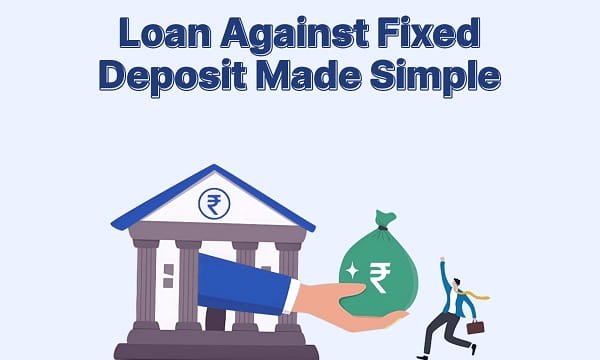
When you take a loan against your FD, the bank lends you a percentage of the deposit’s value — typically 75% to 90% — while the FD continues to earn interest at its original contracted rate for the original contracted tenure. The FD is marked as a lien in favour of the bank for the loan amount. You service the loan through interest payments or EMIs. When you repay the loan in full, the lien is released and the FD continues undisturbed until maturity.
The net interest cost to you is the difference between what you pay on the loan and what you earn on the FD. Since loan against FD rates are typically 1% to 2% above the FD rate, the effective borrowing cost is precisely that margin — one of the lowest effective rates available in any lending product in India.
On a ₹5 lakh FD earning 7% per annum, a loan at 8.5% means you’re effectively paying 1.5% net for the borrowing while your FD continues compounding at 7%. No unsecured personal loan — typically priced at 10.5% to 18% — comes close to this cost efficiency.
Eligibility and Applicable FD Types
Most banks extend loans against FDs held in the same bank. This includes regular cumulative FDs, non-cumulative FDs, and senior citizen FDs. Tax-saving FDs — held under Section 80C with a mandatory five-year lock-in — are specifically excluded from the lien facility. You cannot take a loan against a 80C FD because the lock-in prohibits encumbrance.
For FDs held jointly, the loan must typically be applied for by all joint holders. FDs held in the name of minors cannot be pledged without specific guardian and legal formalities.
The Application Process
At most banks, the loan against FD process is one of the fastest in financial services. For existing customers with netbanking access, it is entirely online.
Log into your bank’s netbanking portal. Navigate to the loans or FD section — most major banks have a dedicated loan against FD facility under the deposits menu. Select the FD you wish to pledge, specify the loan amount within the eligible limit, confirm the loan tenor and repayment preference, and submit. The loan amount is credited to your linked savings account within minutes to hours — often within the same banking session.
For banks where the online facility is unavailable, visiting the branch with your FD receipt and identity documents is sufficient. The bank verifies the FD, marks the lien in their records, and disburses the loan — typically within the same branch visit.
No income proof. No credit score check. No external collateral. The FD is the only security the bank requires.
Overdraft Against FD: The More Flexible Alternative
Many banks offer an Overdraft against FD in addition to — or instead of — a term loan structure. An overdraft account linked to your FD functions like a revolving credit line. You draw from it as needed, repay when convenient, and interest is charged only on the amount drawn and only for the days it remains outstanding.
For borrowers who need intermittent liquidity rather than a one-time lump sum — business cash flow gaps, quarterly advance tax payments, phased project expenditures — the overdraft structure is significantly more cost-efficient than a term loan because you’re not paying interest on capital you haven’t yet deployed.
When Breaking the FD Is Actually Better
Intellectual honesty requires acknowledging the scenario where breaking the FD is preferable. If the loan tenure will be long — beyond the FD’s remaining maturity — or if the loan amount required exceeds the eligible lien percentage, the loan against FD may not fully serve the need. For very small FDs where the processing of the lien facility is disproportionate to the benefit, or where the bank’s systems don’t support online overdraft against that specific FD type, a straightforward premature withdrawal may be simpler. These are exceptions rather than the rule.
Frequently Asked Questions (FAQs)
Q1. Can I take a loan against an FD held at a different bank than my current account?
A: Most banks require the FD and the loan account to be at the same institution — the lien facility operates within the same bank’s books. Some NBFCs and fintech lenders offer loans against FDs from other banks, but these are less common and may carry higher rates. The most efficient route is always through the bank where the FD is held. If you want a loan from a different bank, an FD transfer or new FD creation at the preferred lender is the prerequisite.
Q2. Does taking a loan against my FD affect the interest I earn on the deposit?
A: No. The FD continues earning its contracted interest rate for the contracted tenure regardless of the lien status. The lien is a charge on the deposit as security — it does not alter the deposit’s terms, rate, or maturity. Your FD interest is credited as originally contracted while the loan interest is charged separately on the loan account.
Q3. What happens if I can’t repay the loan before the FD matures?
A: At FD maturity, if the loan is outstanding, the bank settles the loan — principal plus accrued interest — from the FD maturity proceeds and credits the balance to your savings account. This is the bank’s recourse mechanism and is specified in the lien agreement. It is a clean resolution that causes no default record in your credit history, which is one of the most significant risk-management advantages of this product compared to unsecured loans.
Q4. Is the interest paid on a loan against FD tax deductible?
A: Interest paid on a loan against FD is deductible as a business expense if the loan proceeds are deployed for business or professional purposes, with adequate documentation. For personal use loans, there is no income tax deduction on the interest paid — the same limitation that applies to personal loans and gold loans. Consult a CA for the specific treatment in your circumstances, particularly if the end use spans both personal and business purposes.
Q5. Can a senior citizen take a loan against a Senior Citizen FD at the preferential rate?
A: Yes. The lien and loan facility applies to Senior Citizen FDs in the same manner as regular FDs. The senior citizen FD continues earning its higher contracted rate — the loan interest is charged at the bank’s standard loan-against-FD rate above the contracted FD rate. The net borrowing cost calculation is the same — senior citizens accessing loans against their preferentially-rated deposits enjoy an even smaller effective borrowing spread because the base FD rate is higher.