Mundka Industrial Area is one of the largest and most active industrial zones in western Delhi. Located on the outskirts of the capital, this area has grown into a major manufacturing and logistics hub over the past few decades. What was once a semi-rural region is now filled with factories, warehouses, workshops, and transport businesses that support trade across North India.
Today, Mundka Industrial Area plays an important role in the industrial ecosystem of New Delhi. Thousands of small and medium industries operate here, supplying goods to markets across Delhi, Haryana, Punjab, and other parts of the country.
| Category | Details |
|---|---|
| Location | Mundka, West Delhi, India |
| PIN Code | 110041 |
| Developed By | Delhi State Industrial and Infrastructure Development Corporation (DSIIDC) |
| Developed Around | 1990s–2000s |
| Major Industries | PVC products, plastic goods, packaging, furniture, metal works |
| Nearby Areas | Nangloi, Tikri Kalan, Bahadurgarh |
| Nearest Metro Station | Mundka Metro Station (Green Line) |
| Key Road Connectivity | Rohtak Road (NH-9) |
| Industrial Importance | One of the largest industrial clusters in West Delhi |
| Employment | Provides jobs to thousands of workers |
Location and Connectivity
Mundka Industrial Area is located in West Delhi along Rohtak Road, near the Delhi–Haryana border. Its location makes it a strategic gateway between Delhi and industrial towns in Haryana.
The area enjoys strong road connectivity through major routes such as National Highway 9 and the Outer Ring Road. These road networks allow trucks and cargo vehicles to move goods efficiently between Delhi and nearby industrial centers like Bahadurgarh and Rohtak.
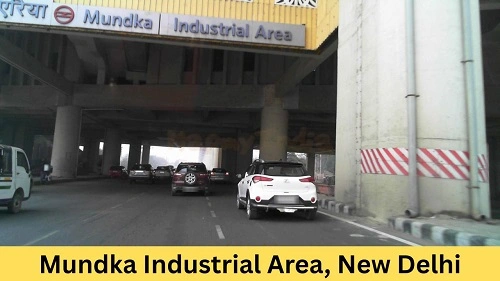
Public transport connectivity has also improved significantly. The area is served by the Green Line of the Delhi Metro. The Mundka Industrial Area metro station and Mundka station provide convenient commuting options for thousands of workers and business owners traveling daily from different parts of Delhi.
Because of its strong transport links, Mundka has become a preferred location for logistics companies and distribution warehouses.
Historical Development
The development of Mundka Industrial Area began as part of Delhi’s broader plan to organize and relocate industries from congested inner-city areas. As manufacturing units moved out of central markets, the outskirts of the city became ideal locations for industrial expansion.
Over the years, the area gradually transformed into a large industrial cluster filled with small factories, workshops, and storage facilities. Industrial activity accelerated with improvements in road infrastructure and the expansion of metro connectivity.
Today, Mundka forms part of a wider industrial belt that stretches across western Delhi and connects with industrial zones in Haryana.
Industrial Ecosystem and Key Sectors
Mundka Industrial Area is known for its diverse industrial base. The region hosts a large number of small and medium enterprises that operate in different manufacturing and processing sectors.
Furniture manufacturing is one of the most prominent industries in the area. Many workshops produce wooden furniture, office furniture, and modular fittings that are supplied to markets across Delhi and neighboring states.
Plastic and packaging industries are also widely present. These units manufacture plastic containers, packaging materials, and molded products used in various industries.
- Other important sectors operating in the area include:
- Electrical equipment manufacturing
- Metal fabrication and engineering workshops
- Printing and packaging industries
- Food processing units
- Plastic recycling and manufacturing
In addition to manufacturing, Mundka Industrial Area has become a major center for warehouses and logistics businesses. Many distribution companies store goods here before transporting them to markets across North India.
Infrastructure and Industrial Facilities
Mundka Industrial Area offers basic infrastructure required for industrial operations. The industrial plots include factory spaces, warehouses, and commercial units that support production and storage activities.
The area has access to electricity supply, water connections, and road transport facilities. Wide internal roads allow trucks and heavy vehicles to move goods between factories and storage units.
Commercial services such as banks, repair workshops, restaurants, and equipment suppliers are also available nearby. These businesses support the daily operations of factories and industrial workers.
Despite these facilities, infrastructure pressure has increased due to rapid industrial expansion and growing traffic movement.
Employment and Economic Importance
One of the biggest contributions of Mundka Industrial Area is employment generation. Thousands of workers depend on industries in this area for their livelihoods.
The workforce includes machine operators, carpenters, factory technicians, drivers, warehouse staff, and office employees. Many workers commute daily from nearby localities and towns.
Small and medium enterprises form the backbone of the industrial economy here. Although many units are individually small, together they create a large production network that supports manufacturing, trade, and logistics across Delhi.
Local transport companies, maintenance services, and small retail businesses also benefit from the economic activity generated by the industrial area.
Challenges and Industrial Issues
Like many older industrial zones, Mundka Industrial Area faces certain infrastructure and planning challenges. Traffic congestion is common due to heavy truck movement and increasing industrial activity.
Waste management and fire safety are also important concerns in the area, particularly in warehouses and manufacturing units dealing with flammable materials.
Government agencies regularly conduct inspections to ensure that industries follow safety regulations and maintain proper fire protection systems.
Improving road infrastructure, drainage systems, and environmental management remains an ongoing priority for local authorities.
Future Growth Potential
Despite these challenges, the future of Mundka Industrial Area remains strong. The continued expansion of logistics, e-commerce distribution networks, and small-scale manufacturing is expected to increase demand for industrial space in the region.
The area’s proximity to the National Capital Region and its metro connectivity make it attractive for businesses that need easy access to Delhi markets.
With infrastructure upgrades and better industrial planning, Mundka Industrial Area is likely to remain a major center for manufacturing, warehousing, and trade in western Delhi.
In conclusion, Mundka Industrial Area, New Delhi stands as one of the key industrial clusters in the capital region. Its strategic location, diverse industries, and large workforce make it an important part of Delhi’s manufacturing and logistics economy.
As industrial demand continues to grow and infrastructure improves, the area will continue to support business expansion, employment generation, and economic activity in the Delhi–NCR region.