Bawana Industrial Area is the largest planned industrial estate in Delhi and one of the most significant manufacturing clusters in North India. Located in the northwestern part of the capital, the area was developed to relocate thousands of small and medium industries from residential zones across the city. Over time, it has grown into a massive industrial ecosystem that supports manufacturing, logistics, and warehousing operations.
The industrial estate is managed by the Delhi State Industrial and Infrastructure Development Corporation, which was responsible for planning and developing the area as part of Delhi’s industrial restructuring program. Spread across nearly 1,900 acres, Bawana Industrial Area now houses more than 16,000 industrial plots and has become a major hub for micro, small, and medium enterprises (MSMEs).
Today, Bawana Industrial Area plays a vital role in the industrial economy of New Delhi and the wider National Capital Region.
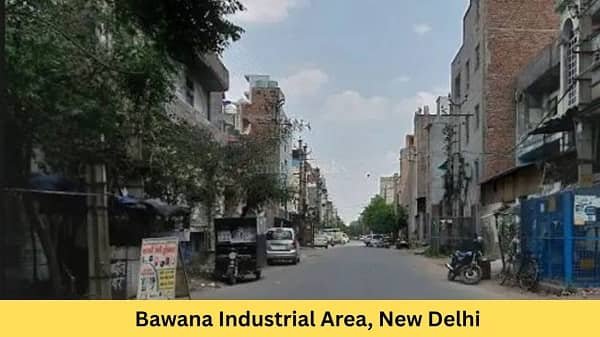
Bawana Industrial Area, New Delhi — Quick Overview
| Category | Details |
| Location | North-West Delhi |
| Developed By | Delhi State Industrial and Infrastructure Development Corporation (DSIIDC) |
| Total Area | Approx. 1,900 acres |
| Number of Industrial Plots | 16,000+ |
| Industrial Sectors | 5 Major Sectors |
| PIN Code | 110039 |
| Major Industries | Plastics, Steel, Electronics, Chemicals, Warehousing |
| Nearest Highway | National Highway 44 |
| Nearest Metro Station | Rithala Metro Station |
| Future Metro Line | Delhi Metro Red Line Extension |
| Nearby Localities | Narela, Rohini, Bhorgarh |
| Managing Authority | DSIIDC |
Industrial Ecosystem and Key Sectors
Bawana Industrial Area hosts one of the largest concentrations of MSMEs in Delhi. The estate is divided into five industrial sectors, each containing hundreds of manufacturing units and industrial sheds.
The plastic and polymer industry is one of the dominant sectors in the region. Many factories produce plastic granules, molded plastic products, packaging materials, and recycled plastic goods.
Steel and metal industries also have a strong presence. Numerous factories operate rolling mills, die-casting facilities, and stainless steel fabrication workshops.
Other major sectors operating in Bawana include:
- Electronics and electrical equipment manufacturing
- Chemical and industrial paint production
- Cable and wire manufacturing
- Plastic recycling industries
- Logistics and e-commerce warehouses
Sector 5 and the nearby Bhorgarh area have recently developed into major logistics hubs for e-commerce companies and distribution businesses.
Location and Connectivity
Bawana Industrial Area benefits from strong connectivity with major transport corridors in Delhi and neighboring states.
The industrial estate is located close to National Highway 44, which connects Delhi with Haryana, Punjab, and other northern states.
One of the major upcoming infrastructure improvements is the extension of the Red Line of the Delhi Metro from Rithala to Narela. The project will include dedicated metro stations serving the Bawana Industrial Area, making daily commuting easier for thousands of workers.
Another major development is the Urban Extension Road-II project, often referred to as Delhi’s “Third Ring Road.” This expressway will connect Bawana directly with the airport corridor and other major highways without passing through central city traffic.
These projects are expected to significantly improve transportation and logistics efficiency for businesses operating in the area.
Infrastructure and Industrial Facilities
Bawana Industrial Area has been designed with organized industrial plots and wide internal roads capable of handling heavy transport vehicles.
The industrial estate includes warehouses, factory units, industrial sheds, and logistics facilities that support manufacturing and distribution activities.
Recent infrastructure upgrades include road redevelopment projects, improved drainage systems, and LED street lighting across several sectors.
The nearby Bawana Gas Power Plant ensures a stable electricity supply for industries operating in the region, helping maintain uninterrupted manufacturing operations.
The government is also planning Common Facility Centres where MSMEs will be able to access shared machinery, testing laboratories, and advanced manufacturing equipment.
Residential and Social Infrastructure
The industrial area is supported by several nearby residential neighborhoods. Areas such as Rohini and Narela provide housing options for workers and professionals employed in Bawana.
These localities include schools, hospitals, shopping centers, and public transport facilities.
In addition, the nearby Bawana JJ Colony provides housing for a large number of semi-skilled workers employed in factories across the industrial estate.
Economic Importance
Bawana Industrial Area is one of the largest employment generators in Delhi’s industrial sector. Thousands of small and medium enterprises operate within the estate, producing goods that are supplied to markets across India.
The industrial ecosystem also supports numerous indirect jobs in logistics, transport services, maintenance work, and local retail businesses.
Because of its massive scale and diverse industries, Bawana plays a key role in sustaining Delhi’s manufacturing economy.
Challenges and Industrial Issues
Despite its importance, Bawana Industrial Area faces several operational challenges. Environmental compliance is a major concern, especially for industries dealing with chemicals and plastics.
The Delhi Pollution Control Committee strictly monitors industrial activities in the area to ensure compliance with pollution control regulations.
Traffic congestion and parking for heavy vehicles also remain common issues due to the large volume of industrial transport movement.
Industrial associations and government agencies continue to work together to improve infrastructure and environmental management systems.
Future Growth Potential
The future of Bawana Industrial Area looks promising as major infrastructure projects and metro expansion plans move forward.
The development of logistics hubs, e-commerce warehouses, and modern industrial facilities is expected to increase business activity in the region.
With continued government investment in infrastructure and industrial modernization, Bawana is likely to remain one of the most important industrial hubs in Delhi.
Conclusion
Bawana Industrial Area, New Delhi stands as the largest organized industrial estate in the capital city. Its thousands of manufacturing units, strong MSME ecosystem, and growing logistics sector make it a vital component of Delhi’s industrial economy.
As infrastructure improves and new industries establish operations, Bawana will continue to play a central role in manufacturing, employment generation, and economic development in the Delhi–NCR region.