The data center business is one of the 21st century’s most strategically important and fastest-growing infrastructure industries — providing the physical computing infrastructure that powers every digital service, cloud application, streaming platform, and enterprise IT system that modern economies depend on. India’s data center market is growing at 20–25% annually, driven by the explosion of internet users, government data localisation mandates, cloud adoption by enterprises, and the rapid growth of digital financial services, OTT platforms, and e-commerce.
With global technology companies, Indian conglomerates, and specialised infrastructure funds all investing heavily in Indian data center capacity, this industry represents one of the most significant infrastructure investment opportunities of the current decade. Understanding its complete advantages and disadvantages is essential for any serious investor or entrepreneur evaluating this space.
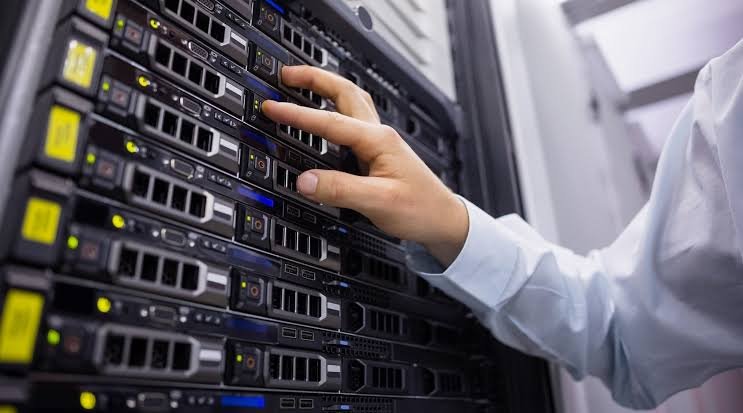
Advantages of Data Center Business
1. Explosive and Structurally Driven Demand Growth
Data center demand in India is not cyclical or discretionary — it is driven by structural forces that compound annually. Every smartphone added to India’s network, every digital payment processed, every OTT subscription activated, and every enterprise application migrated to cloud requires data center capacity that grows faster than the underlying digital economy itself. Government data localisation regulations — requiring certain categories of Indian user data to be stored on Indian soil — have transformed data center investment from a competitive advantage into a legal compliance requirement for businesses serving Indian users. This regulatory mandate provides demand certainty that most infrastructure businesses cannot claim.
2. Long-Term Revenue Visibility Through Contracts
Data centers operate on long-term lease agreements — typically 10–15 year contracts with hyperscale cloud providers and 3–7 year agreements with enterprise colocation customers. This contract duration creates revenue visibility and cash flow predictability that most businesses cannot achieve, allowing data center operators to finance infrastructure construction confidently against contracted future revenues. The infrastructure nature of data centers — where customer switching costs are extraordinarily high due to the complexity of migrating IT infrastructure — creates natural contract renewal rates that make customer retention exceptionally strong once relationships are established.
3. Recession-Resistant Business Model
Digital infrastructure spending — unlike most capital expenditure categories — maintained growth through the COVID-19 pandemic, the 2008 financial crisis, and every other economic disruption of the past two decades. In fact, economic disruptions typically accelerate digital adoption and cloud migration as businesses seek cost efficiency — directly driving additional data center demand. This counter-cyclical characteristic makes data center investments among the most financially resilient infrastructure assets available, providing investors and operators with protection against economic volatility that most real estate and industrial investments cannot offer.
4. Premium Pricing Power in Undersupplied Markets
India’s data center supply has consistently lagged behind demand — creating market conditions where premium pricing is sustainable without competitive erosion. Tier III and Tier IV certified data centers offering 99.982%+ uptime guarantees, redundant power systems, and proven security infrastructure command pricing premiums that customers in mission-critical applications willingly pay for the operational assurance these facilities provide. As demand continues outpacing supply construction timelines, pricing power for quality data center operators remains strong in most Indian markets.
5. Strategic Positioning for Future Digital Economy Growth
Data centers are foundational infrastructure for every emerging technology trend — artificial intelligence computing, edge computing, Internet of Things data processing, 5G network infrastructure, and blockchain applications all require data center capacity that is growing faster than current projections capture. Entrepreneurs and investors who establish data center operations now position themselves at the foundational layer of India’s digital economy transformation — owning infrastructure whose strategic value compounds as the digital economy grows and whose replacement cost creates durable competitive barriers against new entrants.
Disadvantages of Data Center Business
1. Extremely High Capital Investment Requirements
Data center construction is among the most capital-intensive infrastructure investments available — a mid-scale 10MW data center in India requires ₹500 crores to ₹1,500 crores in construction, mechanical and electrical infrastructure, cooling systems, security systems, and network connectivity. Even small-scale edge data centers require ₹20–50 crores minimum for credible Tier III certified facilities. This capital intensity restricts the data center business to well-capitalised institutional investors, large conglomerates, and specialised infrastructure funds — making it inaccessible to most entrepreneurs without access to significant institutional capital or debt financing.
2. High Ongoing Power and Operational Costs
Data centers are among the world’s largest electricity consumers — a 10MW facility consumes electricity valued at ₹50–80 crores annually at Indian commercial power tariffs. Power costs typically represent 40–50% of total data center operating expenses, making electricity tariff volatility a significant and ongoing financial risk. Power reliability is simultaneously a critical operational requirement — unplanned power outages require immediate generator backup to prevent data loss and SLA violations that trigger significant financial penalties. Building and maintaining redundant power infrastructure, cooling systems, and facilities management teams creates operating cost complexity that requires sophisticated operational management.
3. Rapid Technology Obsolescence Risk
Computing technology evolves rapidly — server generations, cooling technologies, and power delivery architectures change significantly every 5–7 years. Data center infrastructure designed for today’s computing requirements may be inadequate or inefficient for next-generation computing workloads — particularly AI training clusters that require specialised high-density power and cooling infrastructure that conventional data center designs cannot accommodate. Managing technology obsolescence requires continuous capital reinvestment in infrastructure upgrades that creates ongoing capex requirements beyond the initial construction investment.
4. Regulatory and Compliance Complexity
Data centers in India operate under a complex and evolving regulatory framework — the Digital Personal Data Protection Act, sector-specific data localisation requirements, telecommunications licensing for connectivity services, electrical installation standards, building codes, and environmental clearances all create compliance obligations that require specialised legal and regulatory expertise to navigate. As India’s data governance framework continues developing, regulatory changes can impose additional compliance requirements on existing facilities — creating ongoing compliance investment uncertainty that must be factored into long-term financial planning.
5. Talent Scarcity and Operational Expertise Requirements
Operating a data center to enterprise-grade reliability standards requires specialised technical talent — data center infrastructure engineers, facilities management professionals, network engineers, and security specialists whose combination of skills is genuinely scarce in India’s talent market. The 24/7/365 operational requirement for mission-critical data centers creates staffing models that are both expensive and complex to manage. Talent competition from hyperscale cloud providers and global technology companies — who pay premium compensation for the same skill sets — makes recruitment and retention persistently challenging for independent data center operators.
Frequently Asked Questions (FAQs)
Q: Is data center business profitable in India? A: Yes — established data centers with high utilisation rates achieve EBITDA margins of 35–45%, making them among the most financially attractive infrastructure investments. Long-term contracts provide revenue stability.
Q: How much investment is required to start a data center in India? A: A small edge data center requires ₹20–50 crores. A mid-scale colocation facility requires ₹200–800 crores. Hyperscale facilities require ₹1,000 crores or more.
Q: What licences are required for a data center in India? A: Data center operators require electrical installation approval, building occupancy certificate, fire NOC, telecommunications infrastructure provider registration, and compliance with DPDA data protection requirements.
Q: What is the most important factor for data center success? A: Power reliability and supply assurance — followed by network connectivity quality — are the most critical operational factors determining customer satisfaction and contract retention.
Q: Can small entrepreneurs enter the data center business in India? A: Direct large-scale data center development requires institutional capital. Small entrepreneurs can participate through edge micro-data centers, managed IT services leveraging colocation, or data center services businesses.