The detergent manufacturing and trading business is one of India’s most fundamental and consistently in-demand consumer goods industries — serving a market where laundry detergent, dishwashing liquid, surface cleaners, and household cleaning products are purchased by virtually every household in the country multiple times monthly. India’s detergent and home care market is valued at over ₹30,000 crore and growing at 8–10% annually — driven by rising hygiene awareness, household income growth, rural market penetration by organised brands, and the explosive growth of liquid detergent and premium product segments.
From manufacturing liquid detergent for local distribution to trading established detergent brands through wholesale and retail channels, the detergent business offers multiple entry points for entrepreneurs at different capital levels.
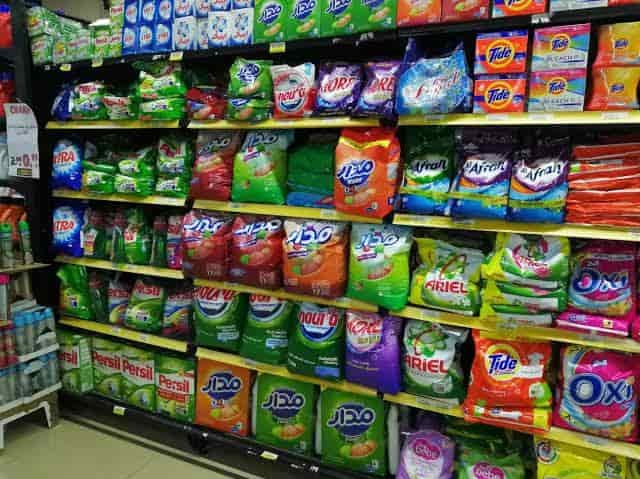
Advantages of Detergent Business
1. Universal and Non-Discretionary Daily Demand
Detergent is among the most genuinely non-discretionary household products — every household, regardless of income level, purchases cleaning products consistently regardless of economic conditions. This universal demand creates one of the most recession-resistant product market foundations available in consumer goods — even during economic downturns, households continue purchasing laundry and household cleaning products because the consequences of not doing so are immediately apparent. India’s 280 million households collectively represent extraordinary aggregate demand that provides structural market stability for detergent businesses at every scale.
2. Large and Underserved Rural Market
Despite the dominance of national brands in urban India, the rural detergent market remains significantly penetrated by local and regional brands that understand distribution economics, pricing requirements, and product format preferences of rural consumers. Small sachets, affordable price points, and direct distribution relationships with rural kirana stores create opportunities for regional detergent manufacturers that national brands’ cost structures and minimum order requirements do not serve optimally. Entrepreneurs who build efficient rural distribution with relevant product formats can capture market share in a growing segment where national brand penetration remains incomplete.
3. Manufacturing Simplicity and Formula Accessibility
Basic detergent manufacturing — particularly spray-dried powder detergents and simple liquid formulations — involves relatively accessible chemistry and production processes compared to most chemical manufacturing businesses. Formulation assistance is available from chemical raw material suppliers, and basic detergent production equipment is available at accessible price points. This manufacturing accessibility makes the detergent business one of the more approachable chemical product manufacturing opportunities for entrepreneurs without deep technical backgrounds who invest in appropriate formulation training.
4. Private Label and Contract Manufacturing Opportunity
Beyond brand building, detergent manufacturers can generate immediate revenue through contract manufacturing — producing detergent products under other brands’ labels for organised retailers, regional brands, and institutional buyers. Modern retail chains including DMart, Reliance Retail, and large e-commerce platforms actively seek private-label detergent manufacturers for their house brand ranges — providing volume manufacturing contracts that utilise plant capacity while brand-building revenue develops. Contract manufacturing provides cash flow stability during the investment-intensive early brand establishment phase.
5. Product Range Diversification
A detergent business can progressively expand its product range to cover multiple household cleaning categories — laundry powder, liquid detergent, fabric conditioner, dishwashing liquid, floor cleaner, toilet cleaner, and surface sanitiser all serve the same retail distribution channels and household purchasing occasions. This range diversification increases revenue per distribution point, strengthens retailer relationships by providing more complete household cleaning solutions, and creates cross-selling opportunities within established customer bases. Each product addition leverages existing manufacturing capability, distribution relationships, and brand trust.
Disadvantages of Detergent Business
1. Overwhelming Competition from Established Giants
The Indian detergent market is dominated by Hindustan Unilever — Surf Excel, Rin, and Wheel — alongside Procter & Gamble’s Ariel and Tide, and Rohit Surfactants’ Ghadi — that collectively control the overwhelming majority of organised market share with marketing budgets, distribution infrastructure, and brand recognition that new entrants cannot approach. These companies invest thousands of crores annually in advertising, trade promotions, and distribution incentives that create competitive barriers at every level of the market. New entrants must find specific market niches — eco-friendly formulations, hyper-local price positioning, or institutional B2B supply — where established giants do not compete effectively on the same terms.
2. Price Sensitivity and Thin Margins
The detergent market is among India’s most price-competitive consumer goods categories — consumers have strong brand familiarity with established alternatives and switch readily based on price promotions. This price sensitivity creates persistent margin pressure that leaves little room for new brands to price above established alternatives without delivering clearly demonstrable quality superiority. Manufacturing at the scale needed to achieve competitive cost structures requires capital investment that creates a challenging chicken-and-egg problem for new entrants — needing scale for cost competitiveness but needing customers to achieve scale.
3. Raw Material Price Volatility
Detergent manufacturing depends on petrochemical-derived raw materials — surfactants, linear alkylbenzene sulphonate, sodium lauryl sulphate, and various chemical builders — whose prices follow crude oil market fluctuations. When petrochemical prices spike, detergent manufacturing costs increase immediately while retail pricing resistance prevents proportional price increases — compressing margins in ways that are difficult to manage without contractual raw material price protections or hedging strategies that small manufacturers lack. Building adequate margin buffer into pricing structures to absorb moderate input cost volatility requires careful pricing discipline.
4. Environmental and Chemical Regulatory Compliance
Detergent manufacturing involves chemical raw materials whose storage, handling, and effluent management are regulated by pollution control and chemical safety regulations. Setting up a compliant manufacturing facility requires investment in chemical storage infrastructure, effluent treatment for manufacturing wastewater, and workplace chemical safety systems that add to capital requirements and ongoing operating costs. Environmental compliance failures create serious legal and operational risk — pollution violations result in plant closure orders that immediately halt production and revenue.
5. Distribution Building Challenge
Even a well-formulated, competitively priced detergent brand achieves nothing commercially without effective retail distribution — getting products onto shop shelves requires building relationships with distributors, providing retailer margins competitive with established brands, and investing in brand visibility support that helps retailers move product. Building distribution from zero in a market where established brands already occupy prime shelf positions and maintain exclusive trade relationships requires both capital for trade support and sustained relationship-building effort that generates results over months rather than weeks.
Frequently Asked Questions (FAQs)
Q: Is detergent manufacturing business profitable in India?
A: Yes — a detergent manufacturing business with efficient production and established distribution can achieve net margins of 12–20%. Private label manufacturing tends to offer lower but more stable margins.
Q: How much investment is needed to start a detergent business in India?
A: A small manufacturing unit requires ₹10–30 lakhs. A trading and distribution business can start for ₹3–8 lakhs in initial inventory and working capital.
Q: What licences are required for detergent manufacturing in India?
A: Factory licence, pollution control board consent, BIS certification for specific products, GST registration, and chemical storage safety compliance are the primary requirements.
Q: Which detergent product has the best margin in India?
A: Liquid detergent and fabric conditioner typically offer better margins than powder detergent due to premium positioning and lower price sensitivity in the growing liquid segment.
Q: Can I start detergent manufacturing at home in India?
A: Basic small-scale manufacturing is possible for very small operations but factory licence and PCB compliance requirements effectively require a dedicated commercial premises for any meaningful production scale.