Drop shipping is an e-commerce business model where the seller lists and sells products online without holding physical inventory — forwarding customer orders directly to suppliers or manufacturers who ship products directly to buyers on the seller’s behalf. This model has attracted enormous entrepreneurial interest in India and globally because it appears to offer a path to e-commerce profitability without the working capital burden of inventory investment. India’s e-commerce market growing at 25–30% annually provides the demand context that makes drop shipping an increasingly relevant business model discussion.
Understanding both the genuine opportunities and the significant limitations of drop shipping is essential for anyone considering this model before committing time and resources to building a drop shipping business.
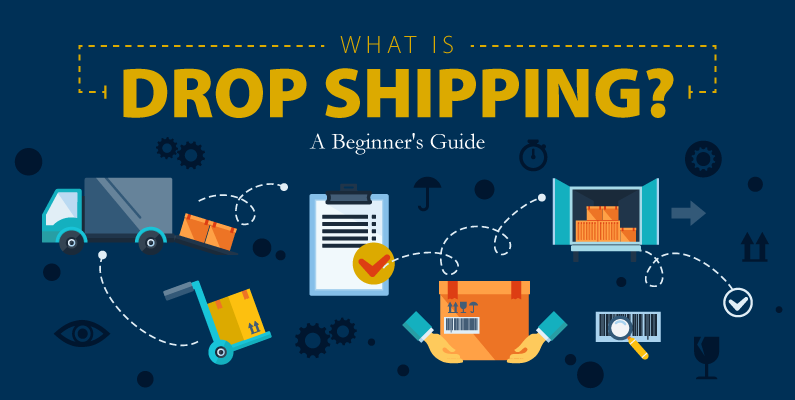
Advantages of Drop Shipping Business
1. Zero Inventory Investment Required
The most compelling advantage of drop shipping is the complete elimination of inventory investment — the single largest capital requirement in conventional retail and e-commerce businesses. Without needing to purchase, store, or manage physical stock, drop shippers can start selling virtually immediately with minimal upfront capital — a website or marketplace listing, supplier relationships, and basic digital marketing represent the entire startup requirement. This capital efficiency allows entrepreneurs to test multiple product categories, niches, and supplier relationships simultaneously without the financial risk that conventional inventory purchase decisions involve.
2. Very Low Startup Cost and Overhead
A drop shipping business can be launched for ₹10,000–₹50,000 — covering website development or marketplace listing fees, basic digital marketing, and supplier account establishment. Without physical storage requirements, there are no warehouse rent costs, no inventory financing costs, and no risk of unsellable stock requiring markdown. This minimal overhead structure means that drop shipping businesses can achieve positive cash flow from the first sale — unlike inventory-based businesses that must recover initial stock investment before reaching cash flow break-even.
3. Location Independence and Scalability
Drop shipping operations can be managed entirely digitally — from a laptop anywhere with internet connectivity. Order processing, supplier communication, customer service, and marketing are all digital activities that require no physical presence. This location independence makes drop shipping one of the most geographically flexible business models available. Scaling a drop shipping business — adding new products, new suppliers, or new customer markets — requires only digital effort rather than physical infrastructure expansion, creating a scalability profile that conventional retail cannot match.
4. Broad Product Range Without Risk
Drop shippers can list hundreds or thousands of products across multiple categories without the financial commitment of purchasing stock — testing which products generate customer interest before any inventory investment is made. This breadth enables rapid market testing and pivoting — unsuccessful product listings are simply removed, while successful ones can be scaled with additional marketing investment. The ability to offer diverse product ranges creates broader customer appeal than single-category specialist retailers achieve.
5. Focus on Marketing and Customer Acquisition
By outsourcing fulfilment entirely to suppliers, drop shipping businesses can concentrate entirely on their highest-value activities — customer acquisition, digital marketing, brand building, and customer relationship management. This operational focus creates marketing excellence that inventory-managing competitors who must simultaneously manage logistics, warehousing, and fulfilment cannot dedicate equivalent attention to. Skilled drop shippers who build genuine digital marketing expertise create competitive advantages through customer acquisition efficiency that product-focused competitors lack.
Disadvantages of Drop Shipping Business
1. Very Thin Margins and Intense Price Competition
Drop shipping margins are notoriously thin — because drop shippers purchase at retail or near-retail prices from suppliers rather than at manufacturing cost, the margin available after supplier cost, platform fees, shipping, and customer acquisition cost is frequently 10–20% or less. In competitive product categories where multiple drop shippers list identical products from the same suppliers, price competition rapidly erodes margins toward supplier cost — creating a race to the bottom that makes sustained profitability extremely difficult. Building margin-supporting brand differentiation in drop shipping requires exceptional marketing skill and consistent customer experience delivery.
2. No Control Over Product Quality or Fulfilment
Drop shippers have no direct control over the most operationally critical aspects of customer experience — product quality, packaging quality, shipping speed, and order accuracy are all entirely in the supplier’s hands. When suppliers ship late, send damaged products, or make fulfilment errors, the customer holds the drop shipper responsible — creating reputation damage from failures the drop shipper cannot prevent or immediately resolve. Managing supplier quality and reliability requires thorough vetting and ongoing performance monitoring that adds complexity to a model presented as simple.
3. Supplier Dependency and Supply Chain Fragility
A drop shipping business is entirely dependent on its supplier relationships — a supplier who discontinues a product, raises prices, runs out of stock, or goes out of business creates immediate customer fulfilment failures that damage reputation and revenue. This dependency creates business fragility that conventional inventory businesses — which buffer supply disruptions through stock — do not face in the same way. Building resilience through multiple supplier relationships for key products adds management complexity that challenges the simplicity that drop shipping is marketed as providing.
4. Customer Service Complexity and Refund Challenges
Managing customer service for drop shipping involves navigating between customer expectations and supplier capabilities — return processes, refund timelines, and complaint resolution all require coordination with suppliers whose responsiveness and flexibility varies widely. Returns in particular create operational complexity — customers typically return products to the drop shipper who must then coordinate with the supplier for return acceptance and credit — a multi-party process that is slower, more expensive, and more frustrating for all parties than conventional retail returns.
5. Limited Brand Building Capability
Products shipped in supplier packaging without distinctive branding create weak brand impressions that limit customer loyalty and repeat purchase rates. In a model where customer acquisition costs are substantial, the inability to create memorable unboxing experiences, consistent brand touchpoints, or distinctive product presentation severely limits the brand equity building that drives lifetime customer value. Drop shippers who cannot differentiate through brand must compete primarily on price — a position that thin margins make commercially unsustainable in the long term.
Frequently Asked Questions (FAQs)
Q: Is drop shipping profitable in India?
A: Profitable drop shipping is possible but requires genuine digital marketing skill, careful niche selection, and consistent supplier management. Most beginners significantly underestimate the customer acquisition cost challenge.
Q: How much investment is needed to start drop shipping in India?
A: ₹10,000–₹50,000 covers website setup, initial marketing, and supplier account establishment. Marketing investment is the primary ongoing cost driver.
Q: Which products are best for drop shipping in India?
A: Niche products with limited local retail availability, high perceived value relative to weight, and clear target audiences generate the best drop shipping economics in Indian markets.
Q: Is Amazon or a personal website better for drop shipping in India?
A: Marketplace platforms provide immediate traffic but charge commissions. Personal websites require marketing investment but allow better margin and brand control — a combination approach is most effective.
Q: Why do most drop shipping businesses fail?
A: Underestimating customer acquisition costs, choosing overly competitive product categories, and poor supplier quality control are the most common causes of drop shipping business failure.