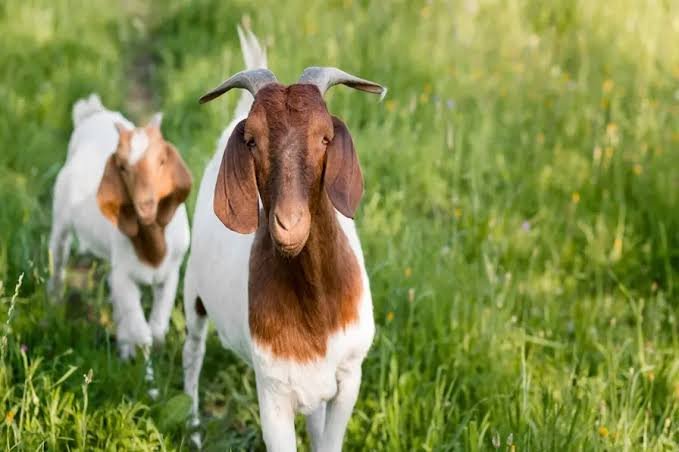
The goat farming business is one of India’s most accessible, most culturally significant, and most consistently profitable animal husbandry enterprises — serving markets where goat meat (chevon/mutton) is among the most preferred and highest-priced meats, goat milk commands premium prices for its nutritional profile, and goat skin provides raw material for leather industries. India has the world’s largest goat population — approximately 150 million goats — and the domestic demand for goat products consistently outpaces supply, creating a structurally favourable market for goat farmers across the country.
From a small backyard goat herd to a commercial goat farm with hundreds of animals, goat farming offers genuine agricultural entrepreneurship opportunity at multiple investment scales. Understanding its complete picture is essential for realistic planning.
Advantages of Goat Farming Business
1. Low Initial Investment and Accessible Entry
Goat farming is among the most financially accessible livestock businesses — a small starting herd of 10–20 goats can be established for ₹50,000–₹2 lakhs, with larger commercial operations requiring ₹5–20 lakhs depending on scale, breed quality, and infrastructure investment. This accessibility makes goat farming one of rural India’s most important poverty alleviation and income generation opportunities — accessible to small landholders, marginalised communities, and women’s self-help groups that would be excluded from more capital-intensive livestock operations. Government schemes including NABARD financing, state animal husbandry subsidies, and the National Livestock Mission provide additional support that reduces effective equity investment requirements further.
2. Strong and Growing Meat Demand
Goat meat is India’s most premium and most consistently in-demand red meat — priced significantly above chicken and competing with mutton on quality grounds in markets across North India, West Bengal, and other major meat-consuming regions. Domestic goat meat demand consistently outstrips supply — driving retail prices of ₹700–1,200 per kilogram that generate attractive revenue per animal at sale. The Eid al-Adha festival creates the most concentrated goat demand event in India’s agricultural calendar — a single annual sales opportunity that can represent a substantial portion of annual revenue for prepared goat farmers who have fattening animals ready for the festival market.
3. Multiple Revenue Sources from Single Herd
A goat herd generates revenue from multiple simultaneous sources — meat sales from male goats and culled animals, milk sales from dairy breeds, kid sales to other farmers for breeding stock or fattening, manure sales as organic fertiliser, and eventually skin sales from processed animals. This multiple revenue stream characteristic provides commercial resilience — when meat prices are temporarily low, milk and kid sales maintain revenue flow. Diversified revenue from a single herd investment creates more stable income than single-product livestock operations.
4. Low Maintenance and Hardy Animals
Goats are exceptionally hardy, adaptable animals that thrive across India’s diverse climate zones — from the Rajasthan desert to the humid coastal plains, and from the Himalayan foothills to the Deccan plateau. They are significantly more disease-resistant than many other livestock species, easier to manage than cattle, and capable of browsing on vegetation that other livestock cannot utilise — reducing feed costs by utilising natural grazing resources. Their smaller individual size makes them easier to handle, transport, and manage than larger livestock, and their rapid reproduction rate — does typically producing two kids per pregnancy and kidding twice annually — creates fast herd growth from initial stock.
5. Government Support and Scheme Availability
Goat farming benefits from comprehensive government support infrastructure — NABARD provides dedicated goat farming project financing at subsidised rates, state animal husbandry departments offer breed improvement programs, vaccination services, and veterinary extension support, and the National Livestock Mission provides capital subsidies for goat farm infrastructure. This support ecosystem reduces both the capital requirements and the technical knowledge barriers for new goat farming entrepreneurs — making the business more accessible and more financially viable than its returns would support without government assistance.
Disadvantages of Goat Farming Business
1. Disease and Mortality Risk
Goat farming carries genuine animal disease and mortality risk that creates direct financial loss when disease outbreaks affect herds. Diseases including Peste des Petits Ruminants (PPR), Foot and Mouth Disease, enterotoxaemia, and respiratory infections can spread rapidly through a herd, causing significant mortality and production losses. Managing disease risk requires rigorous vaccination programs, biosecurity practices, regular veterinary health monitoring, and adequate isolation facilities for new and sick animals — all ongoing management investments that require both knowledge and financial commitment. Veterinary support is often inadequate in remote rural areas, making disease management particularly challenging for geographically isolated farmers.
2. Feed Cost Management and Grazing Land Requirement
While goats are efficient foragers, commercial-scale goat farming requires supplementary feeding — particularly for high-yielding dairy breeds and fattening animals that cannot achieve production targets on grazing alone. Quality feed including green fodder, dry fodder, and concentrate supplements represents a significant and ongoing operational cost. Seasonal feed availability variations — fodder scarcity during summer and drought periods — create both supply challenges and price volatility in feed procurement. Farmers without adequate owned land for fodder cultivation face perpetual feed procurement costs that significantly affect farm economics.
3. Market Price Volatility
Goat meat prices fluctuate significantly with seasonal demand patterns, festival timing, and regional supply conditions. Post-Eid price corrections, summer heat-related demand reductions, and periods of glut from concentrated selling around festivals create price volatility that affects farm revenue planning. Small farmers selling individually at local markets typically receive significantly lower prices than organised market value — lacking the volume and market access needed to achieve wholesale or processing industry pricing. Building direct market relationships with butchers, restaurants, and institutional buyers requires negotiation capability and reliability commitments that informal small farmers find challenging to sustain.
4. Labour Intensive Daily Management
Goat farming requires consistent daily labour — feeding, watering, health monitoring, cleaning, milking (for dairy operations), and kid management all demand reliable daily presence that creates significant lifestyle and family labour commitments. Commercial-scale operations require hired labour whose reliability, training, and management adds operational complexity beyond simple animal husbandry. The 365-day-a-year nature of livestock care — with no holidays from feeding and health monitoring obligations — creates the kind of continuous personal commitment that many aspiring farming entrepreneurs significantly underestimate before starting.
5. Infrastructure and Land Requirements
Commercial goat farming requires appropriate housing infrastructure — weather-protected, ventilated, clean shelters that prevent crowding-related disease spread and provide adequate space for different animal categories. Building adequate goat sheds, feeding areas, milking facilities, and isolation pens requires capital investment that small-scale operators sometimes defer — creating production inefficiency and disease risk that compromises both animal welfare and farm economics. Land access for grazing or fodder cultivation adds to the infrastructure requirement in ways that urban fringe or landless entrepreneurs cannot easily resolve.
Frequently Asked Questions (FAQs)
Q: Is goat farming profitable in India? A: Yes — a well-managed commercial goat farm with 50+ animals can achieve net returns of 20–30% on investment annually. Festival market timing and direct market relationships significantly improve profitability.
Q: How much investment is needed to start a goat farm in India? A: A small farm of 10–20 goats requires ₹50,000–₹2 lakhs. A commercial farm of 50–100 animals requires ₹3–8 lakhs including animals, housing, and equipment.
Q: Which goat breed is best for commercial farming in India? A: Black Bengal, Beetal, Sirohi, and Osmanabadi are among the best commercial breeds for meat production. Jamunapari and Barbari are preferred for combined milk and meat production.
Q: Is government subsidy available for goat farming in India? A: Yes — NABARD provides financing at subsidised rates, and state animal husbandry departments offer capital subsidies of 25–35% under National Livestock Mission schemes.
Q: How many goats are needed for a profitable goat farm? A: A commercial farm needs minimum 25–30 breeding does to generate meaningful income. Farms of 50–100 does represent the most viable commercial scale for full-time farming enterprise.