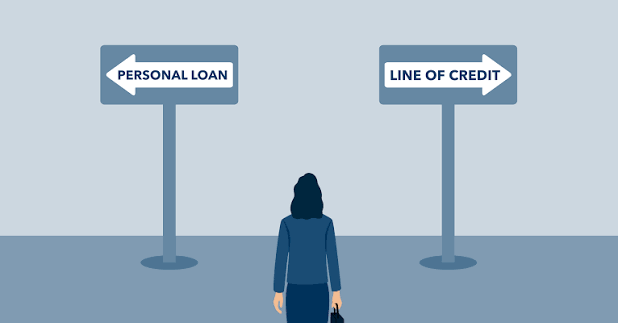
A freelance graphic designer in Kochi earns a genuinely comfortable living through UPI payments from a rotating client base, but she’s never filed an ITR since her income has stayed below the taxable threshold. When she needed ₹2 lakh for a home renovation, three traditional banks rejected her within days — not because she couldn’t afford the EMI, but because their systems weren’t built to read income that doesn’t arrive as a fixed monthly salary slip. This exact wall trips up freelancers, gig workers, homemakers with rental income, and small business owners across India constantly.
Why Banks Ask for ITR and Salary Slips in the First Place
Understanding the actual reasoning explains why genuine alternatives exist.
- Banks request ITR and salary slips to verify two things: that your income exists, and that it’s stable enough to support EMI throughout the loan tenure
- Without these standard documents, a bank’s conventional underwriting process simply can’t complete either check through its usual method
- This isn’t a legal barrier — it’s an operational limitation in how traditional banks assess risk, which is exactly why non-traditional lenders have built different assessment methods
Bank Statements: The Universal Alternative Document
This is the most widely accepted substitute across nearly every lender offering loans without ITR.
- Most lenders accept 6 to 12 months of bank statements showing regular income credits as a substitute for a formal ITR or salary slip
- The stronger and more consistent your income pattern — regular deposits, minimal erratic gaps — the better your chances of both approval and a favourable rate
- Some fintech platforms now use the RBI-backed Account Aggregator framework, accessing your transaction history digitally with your consent, removing manual document uploads entirely
- Approved profiles using this digital route can sometimes see disbursal within 2-4 hours
What Self-Employed and Gig Workers Can Submit Instead
If you run a business or work through platforms rather than draw a salary, several alternative documents work.
- GST returns, for a registered business, demonstrate consistent revenue even without a formal ITR
- Business invoices and client contracts help lenders assess your actual earning pattern and profitability
- Rental income proof — a lease agreement paired with rent receipts — counts as valid income verification for homemakers or individuals relying on property income
- Specialised lenders including KreditBee, CASHe, MoneyView, and Slice specifically underwrite gig workers based on UPI transaction history and platform earnings data
- Pension payment orders work similarly for retired individuals without active employment income
Why Your CIBIL Score Becomes Even More Important Here
When traditional income proof isn’t available, credit history takes on greater weight in the lender’s decision.
- A borrower with no salary slip but a strong CIBIL score around 780 is effectively showing they’ve borrowed before and consistently repaid — that history carries real weight
- Pricing follows a rough scale: bank statements alone typically get rates around 24-36%, while bank statements combined with some ITR history and a strong CIBIL score can bring this down to 14-18% with the right NBFC
- Collateral — gold or a fixed deposit — bypasses income proof requirements almost entirely and typically secures the lowest rates, around 7-12%
Why Adding a Co-Applicant Strengthens Your Application
A practical, often underused strategy worth considering if your own documentation is thin.
- Including a co-applicant or guarantor with stable, verifiable income and a strong credit score eases the approval process considerably
- This works particularly well for self-employed individuals or those newer to business ownership, since the co-applicant’s stronger financial profile offsets the lender’s uncertainty about irregular income
- A longer business operating history also improves standalone credibility over time, meaning newer entrepreneurs specifically benefit from a co-applicant while their track record builds
Matching Lenders to Your Income Type
- Freelancers and gig workers: fintech platforms using UPI and Account Aggregator data tend to underwrite these income patterns most effectively
- Small business owners with newer ventures: NBFCs like Bajaj Finance, Poonawalla, and Tata Capital have shown willingness to accept bank statements plus business proof in place of ITR
- Homemakers or those with rental/investment income: lenders accepting rental agreements, FD statements, or investment income documentation as alternative proof are worth targeting specifically
- Those needing smaller, faster amounts: RBI-registered P2P platforms like Faircent, LenDenClub, and Lendbox offer another legitimate route
Why Checking a Lender’s RBI Registration Matters
- Only work with lenders that are RBI-regulated NBFCs, licensed banks, or RBI-registered P2P platforms — non-negotiable regardless of how convenient an offer appears
- Predatory, unregulated lending apps have specifically targeted borrowers lacking traditional documentation, since these applicants often feel they have fewer alternatives
- Verifying registration takes a few minutes and protects against both excessive interest rates and improper data or recovery practices
Frequently Asked Questions
Q1. If I’m a freelancer with no ITR filed, can I still get a decent interest rate on a personal loan?
Yes, if you can demonstrate consistent income through bank statements and maintain a strong CIBIL score — the combination of steady transaction history and good credit standing can bring your rate down considerably compared to relying on bank statements alone.
Q2. Should I file an ITR even if my freelance income falls below the taxable threshold, just to improve future loan eligibility?
Worth considering — even a nil or low-income ITR filed consistently over a couple of years provides lenders with a standardised, trusted income record, which can meaningfully expand your borrowing options and improve rates compared to relying purely on bank statements.
Q3. Is it safe to use a lending app that specifically advertises loans with no documentation required at all?
Only if you’ve confirmed the app is genuinely backed by an RBI-regulated NBFC or bank — apps promising instant loans with essentially zero verification are a red flag, and confirming registration status before sharing personal or banking information is necessary, not optional.
Q4. Does adding a co-applicant with a stable salary genuinely improve my chances if my own income comes from freelance work?
Yes — a co-applicant with verifiable, stable income and a strong credit score meaningfully strengthens your application, giving the lender additional assurance around repayment, often resulting in both easier approval and better loan terms than applying on irregular income alone.