Selecting a CNC machining manufacturer affects more than the price of a part. The supplier’s equipment, engineering knowledge, inspection methods, and production planning can influence fit, performance, delivery reliability, and downstream assembly costs. Buyers should compare capabilities against the specific demands of their component rather than relying only on a general list of services.
CNC machining uses computer-controlled cutting tools to shape metal or plastic into finished parts. It supports products ranging from hydraulic manifolds and medical housings to aerospace brackets, valve bodies, and automation components. A capable partner should be able to translate an engineering drawing into consistent production while communicating clearly about technical risks, realistic lead times, and inspection requirements.
Matching Equipment, Materials, and Precision Requirements
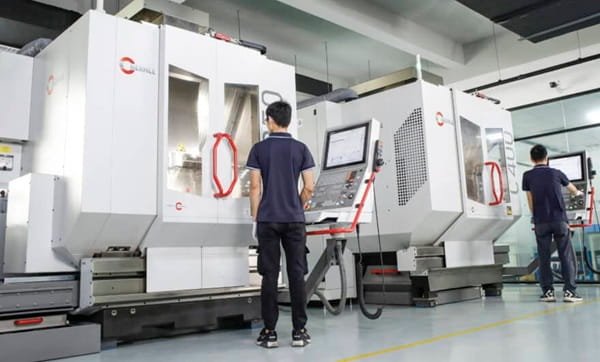
The first consideration is whether the shop’s machines suit the part geometry and the requirements of a custom CNC machining service. Vertical and horizontal milling centers create features such as pockets, faces, holes, and complex contours, while CNC lathes turn round components such as shafts, bushings, and fittings. Multi-axis equipment can machine several sides in fewer setups, which may improve alignment and reduce handling for intricate parts.
Material experience matters because metals and plastics behave differently during cutting. Aluminum is generally easier to machine than stainless steel, while titanium can generate heat and wear tools quickly. A manufacturer should understand how material properties affect tooling, workholding, surface finish, and machining time. Buyers should also confirm whether the supplier can source the specified grade and provide required material documentation.
Precision CNC machining is not defined by a single universal tolerance. A tolerance states how much a dimension may vary from its target value. For example, a hole used for a locating pin often needs tighter control than an exterior surface with no mating function. Buyers should identify critical dimensions, geometric tolerances, threads, and surface-finish requirements, then ask how the shop will verify them.
A practical CNC machining company will also discuss whether every drawing requirement is necessary. Extremely tight tolerances can require slower cutting, specialized tools, additional inspection, or temperature-controlled measurement. That added effort may be justified for a bearing seat or sealing surface, but not for every feature. Clear conversations about functional requirements help balance performance, lead time, and cost.
Assessing Capacity, Quality Systems, and Engineering Support
Capacity involves more than the number of machines on the shop floor. Buyers should ask about available machine time, staffing, setup capability, subcontracted processes, and contingency planning. A supplier that performs a successful prototype run may still struggle with a recurring order if its scheduling system cannot accommodate changing demand. Production capacity should be evaluated at the expected order volume and delivery cadence.
Quality control should be visible in the manufacturer’s process, not limited to a final inspection report. Strong programs commonly include incoming material checks, in-process measurements, documented first-article inspection, and final verification. Tools may include calipers, micrometers, pin gauges, optical systems, and coordinate measuring machines. A coordinate measuring machine uses a probe to measure complex features accurately against the digital model or drawing.
Traceability is especially important for regulated, safety-critical, or high-value industrial parts. It connects a finished component to its material lot, manufacturing records, inspection results, revision level, and any outside processing such as heat treatment or anodizing. This documentation helps buyers investigate a problem, manage design changes, and demonstrate compliance when customers or auditors request evidence.
Design for manufacturability, often called DFM, is another useful indicator of supplier quality. During a DFM review, engineers assess whether a part can be produced efficiently and reliably. They may recommend wider internal corner radii, standard drill sizes, accessible tool paths, or tolerances aligned with function. Buyers should value this early feedback because it can prevent costly revisions after production begins.
Building a Supplier Relationship That Supports Reliable Production
The strongest supplier choice combines technical fit with dependable communication. Buyers should request sample inspection reports, discuss lead-time assumptions, review quality certifications relevant to their industry, and confirm how changes will be managed. A manufacturer that explains constraints early, documents decisions, and maintains traceable records becomes better equipped to support industrial CNC machining from prototype development through repeat production.