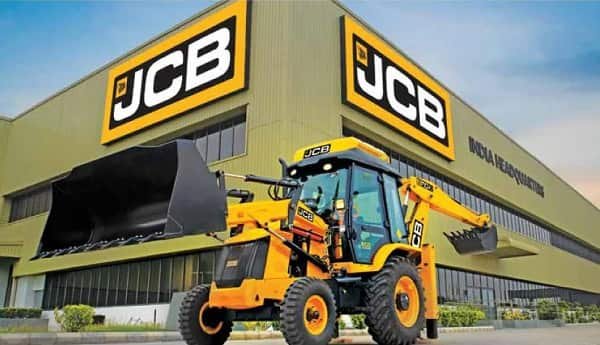
The JCB business — referring to the ownership and commercial operation of excavators, backhoe loaders, and earth-moving equipment commonly known as JCB machines in India — is one of the most capital-intensive yet commercially rewarding equipment rental and contracting businesses in the construction and infrastructure sector. India’s construction industry growing at 7–8% annually, combined with massive government infrastructure spending on highways, metros, irrigation projects, and smart cities, creates consistent and growing demand for earth-moving equipment across every state.
Whether deploying a single JCB machine for local construction rental or building a fleet for infrastructure project contracting, understanding the complete advantages and disadvantages of this business helps entrepreneurs make informed investment decisions before committing significant capital.
Advantages of JCB Business
1. Strong and Infrastructure-Driven Demand
India’s infrastructure development agenda — National Highway expansion, rural road construction under PMGSY, irrigation canal development, urban drainage projects, and real estate construction — creates structural demand for earth-moving equipment that grows year-on-year independent of consumer sentiment. Government infrastructure spending consistently prioritises construction activity that requires excavation, levelling, and earth-moving work that JCB machines perform. This policy-driven demand provides the JCB business with revenue certainty that consumer-dependent businesses cannot claim, making it one of India’s most fundamentally demand-supported capital equipment businesses.
2. High Daily Revenue Per Machine
A single JCB backhoe loader generates rental income of ₹8,000–₹18,000 per day depending on market location, machine model, and contract terms — creating annual gross revenue potential of ₹25–50 lakhs per machine on adequate utilisation. This high daily revenue makes JCB ownership financially attractive even against the significant EMI obligations that machine financing creates. Machines deployed on long-term project contracts generate consistent daily income with minimal operator downtime between jobs — optimising the annual revenue potential that determines the investment’s ultimate profitability.
3. Long Machine Life and Durable Asset Value
Well-maintained JCB machines have operational lives of 10,000–15,000 engine hours — translating into 8–12 years of revenue generation before major reconditioning requirements arise. This asset longevity means that JCB investment creates durable productive assets whose value depreciates gradually while generating substantial cumulative revenue across their operational lives. The robust resale market for well-maintained used JCB machines provides exit liquidity that most capital equipment investments cannot match — owners who maintain machines properly recover significant residual value at end of deployment.
4. Multiple Deployment Models
JCB machines generate revenue through multiple operational models that suit different owner capabilities and market conditions. Wet hire — providing machine with trained operator to clients — generates the highest daily rates and simplest client relationship. Dry hire — providing machine without operator to clients who supply their own — suits clients with trained operators and reduces the owner’s staffing obligation. Long-term project contracts with infrastructure developers provide extended revenue certainty. Developing multiple deployment relationships across model types provides revenue stability that single-model operators cannot achieve.
5. Government Scheme Financing Support
Equipment financing for JCB machines benefits from multiple support mechanisms — MUDRA loans for micro and small equipment operators, NABARD support for agricultural earth-moving applications, state infrastructure development financing schemes, and manufacturer-linked financing programs from JCB India that offer competitive interest rates. These financing options reduce effective equity investment requirements and make machine ownership accessible to operators who would otherwise be excluded by the ₹20–35 lakh machine cost. PMEGP and similar entrepreneurship support schemes provide additional subsidy support for qualifying operators.
Disadvantages of JCB Business
1. Very High Capital Investment
A new JCB backhoe loader costs ₹20–35 lakhs depending on model and specifications — a capital commitment that creates substantial EMI obligations typically ranging ₹40,000–₹70,000 monthly across 4–5 year loan terms. This high debt service requirement means machines must achieve minimum utilisation levels consistently from early in deployment — a pressure that creates financial stress during initial market establishment periods. Any extended machine downtime — from maintenance, operator unavailability, or project delays — creates cash flow gaps between EMI obligations and revenue generation that undercapitalised operators struggle to sustain.
2. Operator Dependency and Skill Requirement
JCB machine operation requires trained, licensed operators whose skill quality directly affects both machine productivity and client satisfaction. Finding, retaining, and managing qualified operators is one of the JCB business’s most persistent operational challenges — good operators receive competitive offers from multiple equipment owners and infrastructure companies simultaneously. Operator attrition disrupts deployment schedules, and untrained or careless operators cause machine damage that creates repair costs significantly exceeding training investment. Building operator loyalty through fair compensation and stable employment requires management investment that machine-focused owners often underestimate.
3. High Maintenance and Repair Costs
Commercial JCB machines in intensive construction use require regular maintenance — engine servicing, hydraulic system maintenance, bucket teeth replacement, and periodic major overhauls collectively create annual maintenance costs of ₹2–5 lakhs per machine. Breakdown repairs — from hydraulic system failures, engine problems, or structural damage — create sudden large expenses that disrupt both machine availability and cash flow. Building adequate maintenance reserves and service relationships with authorised JCB dealers is essential for minimising unexpected repair cost impact on business profitability.
4. Seasonal and Project-Based Revenue Variability
Construction activity follows seasonal patterns — monsoon months significantly reduce site accessibility and construction pace across most of India, creating 3–4 months of reduced JCB deployment that machine financing obligations continue through. Project-based work creates gaps between contract completions and new contract commencement that create utilisation valleys. Managing cash flow through seasonal and inter-project gaps requires financial reserves accumulated during peak deployment periods — a discipline that requires both awareness and planning that first-time JCB operators frequently underestimate.
5. Regulatory and Permit Compliance
JCB machines operating on public roads require transport permits, machine registration with state transport authorities, operator licensing compliance, and third-party insurance covering potential property and injury liability. Operating without proper permits creates regulatory risk — fines, machine confiscation, and work stoppage orders. Site-specific permissions for excavation near utilities, heritage structures, or environmentally sensitive areas add compliance layers that delay deployment starts and require administrative management that purely operational machine owners are not always equipped to handle efficiently.
Frequently Asked Questions (FAQs)
Q: Is JCB business profitable in India?
A: Yes — a well-maintained JCB machine achieving 200+ working days annually generates net returns of 15–25% on investment after financing costs. Long-term project contracts deliver the most stable profitability.
Q: How much investment is required to start JCB business in India?
A: A new JCB backhoe loader costs ₹20–35 lakhs. With financing, effective equity investment is ₹4–8 lakhs plus monthly EMI servicing from operational revenue.
Q: What licences are needed for JCB business in India?
A: Machine registration, commercial vehicle permit for road transport, operator HEMM licence, third-party insurance, and GST registration are the primary compliance requirements.
Q: Which JCB model is best for rental business in India?
A: The JCB 3DX backhoe loader is India’s most popular rental machine due to its versatility across excavation, loading, and levelling applications that suit diverse construction site requirements.
Q: How many days per year should a JCB machine work to be profitable?
A: Achieving 180–220 working days annually is typically sufficient for loan EMI coverage and operational profit generation at standard daily rental rates in most Indian markets.