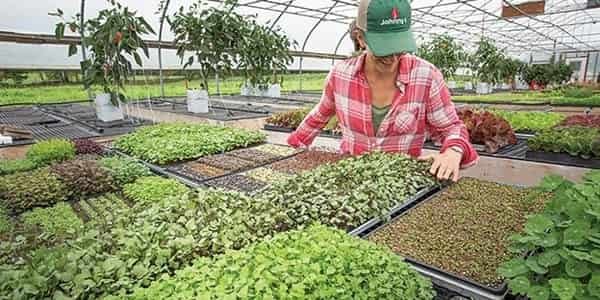
The microgreens business is one of India’s most exciting emerging urban agriculture opportunities — producing nutrient-dense young vegetable seedlings harvested 7–14 days after germination that command extraordinary premium prices from health-conscious consumers, premium restaurants, and wellness-focused food businesses. Microgreens — including sunflower, pea shoots, radish, basil, wheatgrass, and dozens of other varieties — contain 4–40 times the nutritional density of mature vegetables, creating compelling health positioning that supports premium pricing in rapidly growing functional food markets.
Despite being a relatively new commercial concept in India, microgreens businesses are growing rapidly in metropolitan cities where health and wellness culture, premium restaurant demand, and urban farming interest create fertile commercial ground. Understanding both sides helps entrepreneurs assess this genuinely exciting opportunity realistically.
Advantages of Microgreens Business
1. Extremely Low Space and Investment Requirement
Microgreens are grown in shallow trays under grow lights or natural window light — producing commercially significant yields from a single spare room, balcony, or terrace. A 200 square foot growing space with proper shelf organisation can produce 10–20 kg of microgreens weekly — generating ₹15,000–₹40,000 weekly revenue from minimal physical infrastructure. Startup investment including growing trays, shelving, substrate, seeds, and packaging can be established for ₹15,000–₹50,000 — making microgreens one of the most capital-efficient food production businesses available to urban entrepreneurs without agricultural land or large capital resources.
2. Very Short Production Cycle and Fast Cash Flow
Microgreens are harvested 7–14 days after seeding — creating the fastest cash flow cycle of any food production business. Weekly harvest cycles allow continuous revenue generation with rapid production iteration — a grower can test new varieties, adjust growing methods, and respond to market feedback within days rather than the months that conventional farming requires. This rapid cycle also means that production scale can be adjusted quickly — expanding or contracting based on current market demand without the long-term cultivation commitments that seasonal crops impose.
3. Premium Pricing and High Margins
Microgreens command extraordinary retail prices — ₹150–500 per 100 grams in premium urban markets — generating per-kilogram realisation of ₹1,500–5,000 that no conventional vegetable farming can approach. This premium pricing reflects genuine nutritional superiority, freshness, rarity, and the growing health consciousness of urban consumers willing to pay for functional food products. Restaurant supply contracts for specialty microgreens generate ₹800–2,000 per kilogram from chefs who value the visual presentation, fresh flavour, and nutritional credentials that microgreens provide for premium plating. These exceptional per-unit economics make microgreens genuinely profitable from very small production scales.
4. Health and Wellness Market Positioning
Microgreens occupy one of the most compelling positions in India’s growing functional food market — a product with genuine, scientifically documented nutritional superiority whose health credentials are increasingly communicated by nutritionists, doctors, and wellness influencers to receptive urban audiences. This credible health positioning creates demand that marketing cannot fabricate — it is earned through genuine product quality that creates deeply motivated buyers. The growing diabetes and cardiovascular disease awareness in urban India creates medically motivated microgreens buyers who seek concentrated vegetable nutrition as a preventive health strategy.
5. Multiple Market Channels and Revenue Streams
Microgreens generate revenue through diverse simultaneous channels — direct subscription delivery to health-conscious households, restaurant and hotel supply for premium plating, juice and smoothie bar supply, farmer’s market and organic store retail, corporate wellness program supply, and online delivery platforms. Building simultaneous presence across multiple channels provides both revenue stability and growth pathways. Subscription household delivery creates the most financially stable revenue stream — regular customers who incorporate microgreens into daily nutrition routines provide predictable weekly revenue that funds production planning with confidence.
Disadvantages of Microgreens Business
1. Very Short Shelf Life
Harvested microgreens have an extremely short shelf life — 5–7 days under refrigeration, significantly shorter than most perishable vegetables. This ultra-perishability requires same-day or next-day delivery capability after harvest — operational demand that requires either direct delivery infrastructure or reliable cold logistics partnerships. Any harvest that is not immediately sold and delivered faces rapid quality deterioration that renders it unsellable. Building the delivery network and customer commitments needed to absorb each harvest cycle’s production before quality deterioration is the most critical and most challenging operational requirement in the microgreens business.
2. Limited Consumer Awareness Outside Metro Cities
While metropolitan consumers in Mumbai, Delhi, Bengaluru, and Hyderabad represent growing microgreens markets, awareness and purchase motivation outside tier-1 cities remains limited — restricting the addressable market to urban centres and requiring significant consumer education investment to expand into new geographies. Building consumer awareness through sampling, nutritionist partnerships, and social media content marketing requires sustained effort and time before commercial returns materialise. Microgreens businesses that target markets where consumer awareness is insufficient experience frustrating demand limitations that production capability cannot overcome without market development investment.
3. Mould and Contamination Risk
Growing dense plantings of young seedlings in warm, humid conditions creates favourable environments for mould growth — particularly during India’s monsoon season and in poorly ventilated growing spaces. Mould contamination in a growing tray requires complete crop disposal and growing space sanitisation before resuming production — creating both direct financial loss and supply disruption that damages customer relationships. Maintaining adequate air circulation, monitoring humidity levels, using quality seeds with appropriate pre-treatment, and practising rigorous growing space hygiene are essential operational disciplines that require both knowledge and consistent practice.
4. Seed Cost and Quality Dependency
Quality microgreens production depends entirely on non-GMO, untreated, high-germination seeds that must be sourced from reliable suppliers consistently. Premium seed varieties — sunflower, pea shoots, and speciality greens — cost ₹200–1,500 per kilogram and represent a significant production input cost that affects per-tray economics meaningfully. Seed supply disruptions, quality variations between batches, and the premium cost of certified organic seeds for organic-positioned businesses all create procurement management requirements. Building reliable supplier relationships for consistent quality seed supply across multiple varieties requires effort and relationship investment.
5. Market Saturation in Urban Centres
Metropolitan cities with growing microgreens businesses are experiencing increasing competitive saturation — Instagram microgreens businesses, urban farming startups, and organic food delivery companies all offering similar products to the same health-conscious consumers. Price competition among multiple microgreens suppliers in the same city compresses margins from premium toward commodity levels in the most competitive urban markets. Differentiating through superior variety range, certified organic positioning, exceptional customer service, or subscription convenience requires genuine investment and commitment beyond simply growing and selling standard microgreens varieties.
Frequently Asked Questions (FAQs)
Q: Is microgreens business profitable in India?
A: Yes — a microgreens business with established restaurant and subscription clients achieves net margins of 40–60%. Premium organic positioning and direct delivery models deliver the strongest economics.
Q: How much investment is needed to start microgreens business in India?
A: A basic home-based microgreens operation starts at ₹15,000–₹50,000. A commercial-scale operation supplying restaurants and subscription clients requires ₹1–3 lakhs.
Q: Which microgreens sell best in India?
A: Sunflower shoots, pea shoots, radish microgreens, wheatgrass, and mixed salad microgreens are among India’s most consistently demanded varieties across restaurant and health consumer markets.
Q: Do I need a licence to sell microgreens in India?
A: FSSAI food business registration for commercial sales and GST registration once turnover thresholds are crossed are the primary requirements. No agricultural production licences are required for small-scale growing.
Q: Can microgreens be grown without sunlight in India?
A: Yes — LED grow lights designed for plant cultivation provide effective artificial lighting for microgreens production in spaces without adequate natural light. LED technology makes year-round indoor commercial production entirely viable.