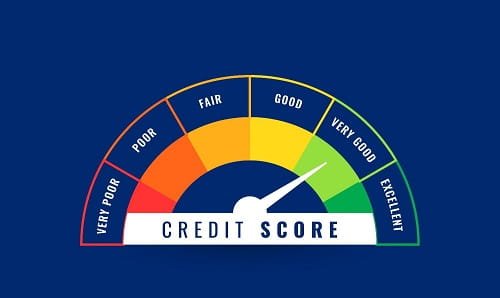
You did something that felt financially responsible — you closed a credit card you weren’t using, removed a debt instrument from your profile, and simplified your financial life. And then your CIBIL score dropped. It feels contradictory and unfair. Why would responsible financial behaviour — eliminating an unnecessary credit product — result in a lower credit score?
The answer lies in understanding exactly which factors the CIBIL scoring model weights and how closing a credit card affects multiple factors simultaneously in ways that are not immediately intuitive. Understanding this doesn’t just explain the drop — it tells you how to minimise it next time and whether the decision to close was worth making at all.
The Three Mechanisms Behind the Score Drop
Mechanism 1: Credit Utilisation Ratio Increased
Credit utilisation is the percentage of your total available credit limit that you are currently using. It is one of the highest-weighted factors in credit scoring — contributing approximately 30% of the CIBIL score calculation.
If you hold three credit cards with combined limits totalling ₹3 lakh and currently use ₹60,000 across them, your utilisation is 20% — within the healthy below-30% range that credit scoring models reward.
Now you close one card that had a ₹1 lakh limit but zero outstanding balance. Your total available credit drops from ₹3 lakh to ₹2 lakh. Your outstanding balance remains ₹60,000. Your utilisation ratio jumps from 20% to 30% — instantly crossing into a range that scores less favourably, purely from the arithmetic of the closed account reducing the denominator.
If the closed card had the highest limit among your cards, this effect is magnified. The larger the limit of the card you closed relative to your total credit exposure, the larger the utilisation jump and the larger the score impact.
Mechanism 2: Average Credit History Length Shortened
Length of credit history accounts for approximately 15% of the scoring model. This factor rewards accounts that have been open for a long time — older accounts demonstrate a longer track record of managing credit responsibly, which reduces the lender’s uncertainty about future behaviour.
The model considers both the age of your oldest account and the average age of all open accounts. Closing a card — particularly one that has been open for several years — removes its age contribution from the average. If the card you closed was your oldest or one of your older accounts, the average credit age of your remaining open accounts drops materially.
An account closed in good standing does remain visible on your CIBIL report for up to seven years, and its history continues to contribute positively to your payment history record during this period. But for the active account average age calculation, a closed account is excluded — making the closure of old accounts particularly impactful on this factor.
Mechanism 3: Credit Mix Was Reduced
Credit mix — the variety of credit types in your profile — contributes approximately 10% of the score. A profile with both revolving credit such as credit cards and instalment credit such as home or vehicle loans scores better on this dimension than a profile with only one type.
Closing a credit card, particularly if it reduces you from multiple credit cards to a single one or eliminates revolving credit from your profile entirely, reduces your credit mix diversity. The scoring model interprets a less diversified credit profile as slightly higher risk.
Was the Score Drop Worth the Closure?
This is the question that actually matters for forward-looking financial decisions. A score drop from closing an unnecessary card is typically temporary and manageable if your broader credit behaviour remains positive — on-time EMI payments, low utilisation on remaining cards, and no new hard enquiries in the near term.
The scenarios where closing was clearly worth the small score cost include cards with high annual fees that you were paying without using the card’s benefits, cards associated with a lender relationship you’ve ended, or situations where having multiple open credit lines was creating actual overspending temptation.
The scenario where the closure is harder to justify is when the card was your oldest account with the highest credit limit and you closed it purely for portfolio tidiness without assessing the utilisation and history impact beforehand. In this case, keeping the card open — even unused, possibly with a small recurring subscription charged to it and paid in full each month — preserves both the credit limit contribution and the account age contribution.
How to Recover the Score After Closure
The most direct recovery path is reducing utilisation on your remaining cards below 30% — ideally below 20%. If existing balances are contributing to elevated utilisation after the limit reduction, paying them down is the fastest lever available.
Continue making all EMI and credit card payments on time without exception. The payment history factor — the single largest component at approximately 35% — steadily rebuilds credit score points over months of consistent positive behaviour. A score that dropped ten to thirty points from a card closure typically recovers within three to six months of continued positive behaviour without any other adverse changes.
Avoid applying for new credit in the immediate aftermath of the score drop. A new hard enquiry on a score that has already declined compounds the negative signal and prolongs the recovery timeline.
Frequently Asked Questions (FAQs)
Q1. My credit card had zero outstanding balance when I closed it. Why did the score still drop?
A: A zero balance closure still affects the utilisation calculation and the average account age. The score impact is not about outstanding debt on the closed card — it is about the changes to your overall credit profile metrics. A zero-balance high-limit card actually provides the most favourable utilisation contribution because it adds to available credit with no corresponding balance. Closing it removes that favourable contribution even though it carries no debt.
Q2. How many points can I expect my CIBIL score to drop after closing a credit card?
A: The magnitude depends on several variables — the limit of the closed card relative to total available credit, the age of the closed account, your current utilisation on remaining cards, and your starting score. A score drop of ten to forty points is typical for most card closures. Higher scores tend to drop more from the same action because they have more to lose — a borrower with a 790 score may see a thirty-point drop while a borrower with a 680 score may see only a ten-point drop from an identical closure.
Q3. Should I reopen the closed card to recover the score faster?
A: Credit card reopening is not typically possible — closed accounts generally cannot be reinstated. A new application for the same card from the same issuer is treated as a fresh application, generating a new hard enquiry and a new account with a zero age history. This would likely provide less benefit and cost an enquiry. The better path is allowing natural recovery through continued positive behaviour on existing accounts.
Q4. If I never use my remaining credit cards but keep them open, does the unused credit still help my score?
A: Yes — open credit cards with zero or very low balances contribute positively to your utilisation ratio by expanding the denominator of available credit without adding to the numerator of outstanding balance. An open, unused card with a ₹1 lakh limit and zero balance is always beneficial to your utilisation calculation and continues contributing its account age to your credit history length. The only downside of maintaining open unused cards is the annual fee — which for zero-fee lifetime-free cards is irrelevant.
Q5. My credit card issuer closed my card due to inactivity rather than my own choice. Does this affect the score differently than a voluntary closure?
A: From the credit scoring model’s perspective, the mathematical effect is identical — the card’s limit is removed from available credit, its account age contribution to open account calculations ceases, and if it was your oldest account, the average age drops regardless of who initiated the closure. The difference is in your control — a proactive closure is a planned decision while an inactivity-triggered closure may be unexpected. To prevent inactivity closures, make a small transaction on each credit card every three to six months — a recurring subscription or a small purchase paid immediately — which signals activity to the issuer and keeps the account live.