The EV charging station business is one of India’s most exciting and most strategically significant emerging infrastructure opportunities — positioned at the intersection of the electric vehicle revolution, government clean energy policy, and the growing consumer adoption of two-wheelers, three-wheelers, and four-wheelers running on electricity. India’s electric vehicle market is growing at over 40% annually and is projected to reach 40% of total vehicle sales by 2030 under government targets — creating extraordinary demand for public charging infrastructure that is currently severely underdeveloped relative to the vehicle fleet growth trajectory.
With FAME-II subsidies, state government incentives, and private investment flowing into EV charging infrastructure, this business offers genuine first-mover advantages for entrepreneurs who act during the current establishment phase of India’s EV charging ecosystem.
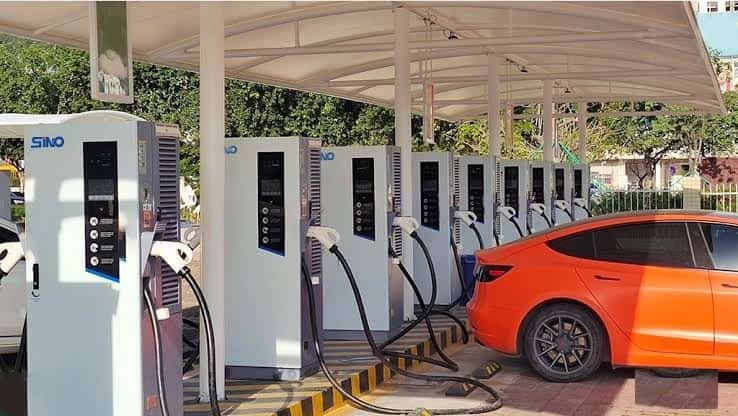
Advantages of EV Charging Station Business
1. Government Policy Support and Subsidy Benefits
The EV charging station business benefits from one of the most comprehensive government support frameworks available to any infrastructure business in India. The FAME-II scheme provides capital subsidies for EV charging equipment. The Bureau of Energy Efficiency’s EESL program supports public charging infrastructure deployment. State-specific EV policies in Maharashtra, Delhi, Karnataka, Gujarat, and other states provide additional incentives including reduced electricity tariffs for charging stations, land allocation for public charging infrastructure, and permitting facilitation. This multi-level government support reduces effective capital investment requirements and accelerates the business viability timeline compared to what market economics alone would support.
2. First-Mover Advantage in Rapidly Growing Market
India’s EV charging infrastructure is dramatically underdeveloped relative to the vehicle fleet growth trajectory — creating significant first-mover advantages for entrepreneurs who establish charging network presence now before competitive saturation arrives. Early operators capture premium location advantages, build brand recognition with EV users who develop charging habits around convenient established stations, and develop operational expertise that latecomers must expensively acquire. The value of established charging locations compounds as EV fleet density in any geography increases — early network effects are disproportionately valuable.
3. Multiple Revenue Streams Beyond Charging Fees
EV charging stations generate revenue beyond the primary electricity unit sales — advertising display revenue from digital screens at charging stations, ancillary product sales to customers who dwell during charging, service fee income for app-based booking and reservation systems, and data monetisation from charging network analytics all contribute to the revenue base. Premium charging stations at highway locations can add food and beverage services, vehicle cleaning, and convenience retail — transforming the charging wait time into a service opportunity that generates per-customer revenue substantially above electricity sales alone.
4. Scalable Asset Network Model
Each charging station is a revenue-generating asset whose return on investment improves with utilisation — and utilisation improves automatically as the EV fleet in the station’s catchment area grows. This passive demand growth dynamic means that EV charging stations established now in high-traffic locations will generate progressively better returns over time without additional investment, as the EV fleet naturally expands around them. Building a network of stations across multiple locations creates compounding asset value and brand network effects that single-location operators cannot achieve.
5. Alignment with Unstoppable Long-Term Trends
The EV charging business is structurally aligned with three of the most powerful and most irreversible long-term trends affecting India — electrification of transportation driven by economics, government policy, and environmental necessity; the urbanisation that concentrates vehicle density in locations where public charging infrastructure is most valuable; and the digital economy that enables app-based charging management, payment processing, and network optimisation. These trends are not dependent on any single policy decision or market condition — they represent the structural direction of India’s transportation system over the coming decade with a conviction that few business opportunities can match.
Disadvantages of EV Charging Station Business
1. Long Payback Period and Capital Intensity
EV charging infrastructure requires significant upfront capital — a fast-charging station with 2–4 DC fast chargers requires ₹15–40 lakhs in equipment and installation, plus land lease costs, electricity connection upgrade costs, and civil infrastructure. Current EV fleet density in most Indian locations outside major metropolitan areas generates insufficient utilisation to achieve financial returns quickly — payback periods of 5–8 years are typical for locations outside premium high-traffic environments. Investors and entrepreneurs must be financially patient and adequately capitalised to sustain operations through the fleet density build-up phase before strong financial returns materialise.
2. Grid Power Reliability and Electricity Cost Challenges
EV charging station economics are directly dependent on reliable grid power supply and competitive electricity tariffs — two factors that vary dramatically across India’s diverse state electricity distribution landscapes. High-demand charging periods that require grid upgrades create infrastructure costs beyond the charging equipment itself. Power outages — common in many Indian regions — create charging service failures that frustrate EV users and damage the charging network’s reliability reputation. Managing power reliability through backup systems or solar integration adds capital cost that extends the already long payback period.
3. Technology Standardisation Uncertainty
India’s EV charging connector standards are not fully settled — different vehicle manufacturers support different connector types, charging protocols, and communication standards. Investing in charging infrastructure that becomes incompatible with future vehicle models creates obsolescence risk that conventional fuel retail does not face. The rapid pace of EV technology development — with fast-charging speeds, battery capacities, and vehicle communication protocols all evolving quickly — means today’s charging infrastructure investment may require significant upgrades sooner than conventional infrastructure investment timelines suggest.
4. Location Dependency and Real Estate Cost
Charging station commercial viability is entirely determined by location quality — a station in a high-footfall area with strong EV density catchment generates viable utilisation while an identical station in a low-traffic area generates negligible revenue. Premium commercial locations — highway dhabas, mall parking areas, office complex parking, and high-street locations — command high lease rates that significantly affect charging station economics. Securing genuinely high-quality locations at sustainable rental rates requires negotiation skill and real estate market knowledge that adds complexity to what appears to be a straightforward infrastructure business.
5. Maintenance Complexity and Technical Support Requirements
EV charging equipment requires specialised maintenance and technical support that is not yet widely available across India’s service landscape. Equipment faults — connector failures, software errors, payment system issues, and power electronics problems — create user experience failures that generate negative reviews and reduce return visits in the trust-dependent early adoption phase of EV infrastructure. Building reliable technical support partnerships with equipment suppliers or developing in-house maintenance capability requires both investment and time that adds to operational complexity beyond the simple asset deployment model that charging station investment is sometimes presented as.
Frequently Asked Questions (FAQs)
Q: Is EV charging station business profitable in India? A: Profitability depends heavily on location and utilisation — premium highway and urban high-traffic locations with good EV density can achieve positive returns within 3–5 years. Lower-traffic locations have longer payback periods.
Q: How much investment is required to set up an EV charging station in India? A: A basic AC slow-charging setup requires ₹2–5 lakhs. A fast-charging station with multiple DC chargers requires ₹15–40 lakhs including installation and power connection upgrades.
Q: What government subsidies are available for EV charging in India? A: FAME-II provides capital subsidies on charging equipment. State policies offer additional incentives including reduced electricity tariffs, land allocation, and permitting support in several states.
Q: What licence is required for EV charging station in India? A: Ministry of Power guidelines permit EV charging as a service business without electricity license requirements. Local municipal permissions, electricity connection agreement, and GST registration are the primary requirements.
Q: Which location is best for an EV charging station in India? A: Highway corridors, shopping mall parking areas, corporate office complexes, and residential society common areas currently offer the best combination of utilisation potential and demographic alignment with EV users.