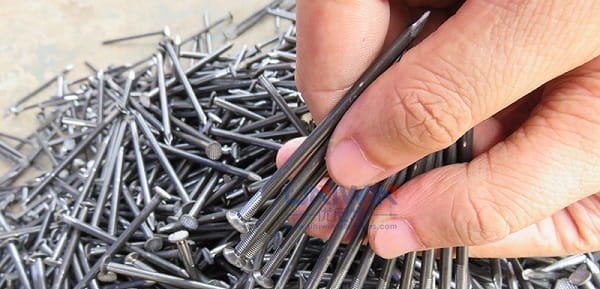
The nail making business is one of India’s most foundational small-scale manufacturing opportunities — producing iron wire nails, steel nails, and speciality fasteners that are essential consumable inputs for construction, furniture manufacturing, packaging, and general fabrication across every sector of the economy. India’s construction boom, real estate development activity, and growing furniture manufacturing industry create consistent structural demand for nails and fasteners that makes this business commercially attractive for entrepreneurs seeking manufacturing businesses with proven and stable demand.
From a small workshop producing standard wire nails for local markets to a larger operation supplying hardware distributors and construction material chains, the nail making business offers genuine opportunity for entrepreneurs with manufacturing inclination and access to appropriate infrastructure. Understanding both sides of this business helps entrepreneurs plan investments realistically.
Advantages of Nail Making Business
1. Consistent and Non-Discretionary Industrial Demand
Nails are consumed daily in construction, furniture manufacturing, packaging, and general fabrication — creating demand that is structural rather than discretionary. Every building constructed, every furniture piece assembled, and every wooden packing crate produced consumes nails as unavoidable input materials. India’s construction activity — driven by real estate development, government housing programs, and infrastructure projects — creates steady underlying demand that grows consistently with economic development. This non-discretionary industrial consumption provides nail manufacturers with demand visibility that consumer product businesses dependent on discretionary spending cannot claim.
2. Simple Manufacturing Process
Wire nail manufacturing involves a technically straightforward production process — wire drawing to appropriate gauge, cutting to specified lengths, forming heads, pointing tips, and packaging. Modern automatic nail making machines handle the complete process from wire input to finished nail output with minimal operator supervision. This operational simplicity means entrepreneurs without engineering backgrounds can successfully operate nail making facilities with appropriate equipment training and quality management systems. The absence of complex chemical processes, skilled artisan requirements, or proprietary technical knowledge significantly reduces the expertise barrier to entry.
3. Low Raw Material Cost with Available Supply Chain
Mild steel wire — the primary raw material — is a widely available commodity produced by India’s substantial steel industry and distributed through an extensive dealer network across all manufacturing regions. Multiple wire suppliers in every major manufacturing centre create procurement competition that keeps raw material prices competitive and supply chain disruption risk manageable. The straightforward raw material supply chain — without exotic imports, seasonal availability constraints, or quality certification requirements beyond standard steel specifications — simplifies procurement management compared to businesses with complex ingredient sourcing requirements.
4. Government Support for Small Manufacturing
Nail manufacturing qualifies as small-scale manufacturing under MSME definitions — making it eligible for multiple government support schemes including MUDRA loans for equipment financing, PMEGP entrepreneurship support, priority sector lending from banks, and various state industrial development incentives. MSME status also provides marketing preference in government procurement through GeM portal listing, providing access to institutional customers that large competitors serve with scale advantages that MSME preference partially offsets. These support mechanisms reduce effective capital requirements and improve initial market access for qualifying nail manufacturers.
5. Multiple Product and Market Diversification
Nail manufacturing equipment and skills transfer efficiently to related fastener products — roofing nails, coil nails, duplex nails, galvanised nails, concrete nails, and speciality packaging nails all represent product extensions from the same basic manufacturing capability. Expanding the product range serves different construction and industrial customer segments simultaneously, improving both revenue per customer relationship and total business revenue from a single manufacturing investment. Packaging customer supply, furniture manufacturer direct supply, and hardware wholesale distribution channels all represent market diversification that single-product operations cannot access.
Disadvantages of Nail Making Business
1. High Competition and Price Pressure
The nail making business is intensely competitive — hundreds of small-scale manufacturers across India’s major manufacturing states produce functionally identical standard nails at competitive prices. Price is the primary competitive differentiator in commodity nail markets where buyers switch suppliers readily based on small price differences. Building sufficient cost efficiency to compete sustainably requires high production utilisation, efficient raw material procurement, and operational discipline that new entrants frequently struggle to achieve against established manufacturers with accumulated experience and customer relationships. Competing against large importers from China adds further pricing pressure in some market segments.
2. Steel Price Volatility and Margin Risk
Steel wire prices follow global steel markets and domestic supply conditions — fluctuating with coal prices, iron ore costs, energy costs, and government import-export policies in ways completely outside nail manufacturer control. When steel prices increase significantly, nail manufacturing margins compress unless customer pricing can be adjusted proportionally — a difficult achievement in price-competitive markets where customers resist price increases by switching suppliers. Managing steel cost exposure through strategic inventory building during price dips and contractual price adjustment provisions with customers requires commercial sophistication that small manufacturers may not initially possess.
3. Capital Investment in Machinery
Automatic wire nail making machines of appropriate commercial production capacity require ₹3–8 lakhs each, and establishing a commercially viable production unit with multiple machines, wire drawing equipment, packaging infrastructure, and quality testing capability requires ₹10–25 lakhs in equipment investment. This capital requirement creates EMI obligations that must be serviced from production revenue — requiring adequate sales volume and pricing margins from early in operations. Machine maintenance and periodic replacement of wear parts create ongoing capital requirements that must be budgeted as regular operational expenses.
4. Distribution and Market Access Challenges
Nails are heavy, bulky, and low-value per kilogram — creating transportation cost challenges for distribution beyond a limited geographic radius from the production facility. Reaching hardware distributors, construction material retailers, and industrial buyers outside local markets requires distribution infrastructure and relationships that take time to develop. Without established distribution reach, new nail manufacturers are confined to local markets where supply competition from existing producers limits both volume and pricing. Building distribution channels to expand market reach requires both investment and persistent relationship development effort.
5. Environmental and Safety Compliance
Wire nail manufacturing involves metal working processes that generate noise, metal dust, and occasional chemical waste from wire drawing lubricants — creating environmental and occupational safety compliance requirements. State pollution control board consent for manufacturing operations, industrial safety standards compliance for machinery operation, and waste management for metal scrap and lubricant waste all require ongoing management. Worker safety in nail manufacturing — protecting against wire injuries, machinery contact, and metal dust inhalation — requires genuine investment in safety equipment and procedures that responsible manufacturers must maintain consistently.
Frequently Asked Questions (FAQs)
Q: Is nail making business profitable in India?
A: Yes — a well-managed nail manufacturing unit with established distributor relationships and efficient production achieves net margins of 12–20%. Higher margins are achievable in speciality nail segments.
Q: How much investment is needed to start nail making business in India?
A: A small nail making unit with 2–3 automatic machines requires ₹10–20 lakhs for machinery, raw material inventory, factory setup, and working capital.
Q: What licences are required for nail making business in India?
A: Factory licence, pollution control board consent, MSME Udyam registration, GST registration, and BIS certification for specific product categories are primary requirements.
Q: Which nails have the best demand in India?
A: Common wire nails for construction and furniture are highest volume. Galvanised nails for outdoor and roofing applications and concrete nails for masonry work command premium prices over standard nails.
Q: Can nail making business be started under MSME scheme in India?
A: Yes — nail manufacturing qualifies as MSME manufacturing under Udyam registration, providing access to MUDRA loans, PMEGP subsidies, priority sector bank lending, and GeM portal procurement preferences.