The flower business is one of India’s most culturally embedded, most emotionally resonant, and most consistently demanded commerce categories — flowers are woven into the fabric of daily Indian life through religious worship, festival celebration, wedding ceremonies, gifting traditions, and home decoration in ways that create year-round demand across every community, region, and income level. India’s floriculture market is valued at over ₹15,000 crore and growing at 15–20% annually, driven by urbanisation, rising wedding expenditure, growing café and hotel décor culture, and the explosion of online flower delivery platforms.
From a neighbourhood flower stall to a premium floral design studio or an online flower delivery business, the flower business offers genuine commercial opportunity across multiple scales. Understanding its complete advantages and disadvantages provides the honest foundation needed for informed entrepreneurial decisions.
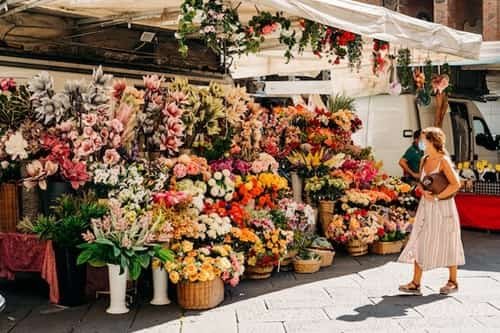
Advantages of Flower Business
1. Universal and Daily Religious and Cultural Demand
Flowers in India are not a luxury or occasional purchase — they are a daily requirement for millions of Hindu, Jain, and Buddhist households who offer fresh flowers in home and temple worship every morning. Marigolds, jasmine strings, lotus, and roses are purchased daily by a substantial proportion of India’s population for puja — creating reliable base demand that is not discretionary, not seasonal, and not economically sensitive. This religious demand foundation provides the flower business with daily customer traffic that most other retail businesses would pay substantial marketing investment to generate consistently.
2. Low Startup Investment for Basic Operations
A neighbourhood flower stall or market-based flower selling operation requires minimal startup capital — wholesale flower procurement, basic display infrastructure, and a suitable location represent the complete startup requirement for initial operations. A basic flower stall can begin with ₹10,000–₹30,000 in initial stock and setup. Even a small flower shop with basic refrigeration and décor can be established for ₹1–3 lakhs. This accessible entry cost makes the flower business one of the most financially inclusive retail entrepreneurship opportunities in the food and agriculture-adjacent sector.
3. Strong Wedding and Event Market Revenue
India’s wedding industry — estimated at ₹5 lakh crore annually — creates extraordinary demand for floral decoration that represents the flower business’s highest-value market segment. A single large Indian wedding requires floral decoration across multiple venues and ceremonies — mandap decoration, stage arrangements, path decorations, bridal jewellery made of flowers, and guest garland welcome kits collectively represent floral spends of ₹50,000–₹5 lakhs per wedding depending on scale and ambition. Building wedding and corporate event floral design capability creates revenue per engagement that daily retail selling cannot approach.
4. Premium Floral Design and Gifting Opportunity
Beyond commodity flower selling, the flower business offers substantial premium market opportunity — designer bouquets, luxury flower arrangements, subscription flower boxes, and corporate décor contracts all command prices 3–10 times commodity flower value. Online flower delivery platforms — Ferns N Petals, FlowerAura, and Instagram-direct floral studios — have created national premium gifting markets where beautiful flower arrangements for birthdays, anniversaries, and Valentine’s Day are purchased at ₹500–5,000 per bouquet. Developing floral design skills transforms commodity trading margins into artisan service margins.
5. Multiple Revenue Streams and Segment Diversity
The flower business serves multiple simultaneous customer segments — daily puja buyers, gifting customers, wedding planners, corporate décor clients, hotel and restaurant décor subscriptions, and funeral flowers all represent distinct revenue streams that layer on top of each other. This segment diversity provides revenue stability that single-segment businesses cannot achieve — wedding and event revenue peaks compensate for quieter daily trading periods, and regular subscription corporate décor contracts provide predictable monthly income alongside variable event revenue. Each segment addition strengthens the overall business financial resilience.
Disadvantages of Flower Business
1. Extreme Perishability and Daily Wastage
Flowers are among the world’s most perishable products — most cut flowers remain sellable for only 2–5 days at ambient temperature, and even with refrigeration, quality windows are narrow. A flower business that overbuy for a day or week of unexpectedly low demand faces total loss on unsold stock — a financially painful outcome that experienced flower sellers still encounter regularly. Accurately predicting daily demand across multiple flower varieties, price points, and seasonal availability requires experience and market knowledge that takes years to develop. Daily wastage management through markdown pricing, garland making from near-expiry flowers, and donation arrangements helps recover some value from unsold stock but cannot eliminate wastage losses entirely.
2. Early Morning Working Hours and Physical Demands
The flower business operates on early morning schedules dictated by wholesale flower market timing — major flower markets across India open between 3 AM and 6 AM, requiring buyers to be present before dawn for best selection and pricing. This early morning requirement combined with the physical demands of handling bulk flower quantities, setting up displays, and maintaining freshness throughout the selling day creates a working lifestyle that is physically demanding and socially constraining. Managing early market procurement alongside retail selling hours creates effectively split working days that are difficult to sustain without adequate staff support.
3. Seasonal Demand Fluctuation and Price Spikes
Flower demand surges dramatically during wedding seasons, Valentine’s Day, Diwali, and other festivals — creating supply shortages and wholesale price spikes that compress retail margins precisely when sales volumes are highest. Rose prices on Valentine’s Day can increase 5–10x compared to regular weeks, making it difficult for retailers to fully benefit from demand peaks without either forward procurement at pre-spike prices or the ability to pass extreme cost increases to customers. Managing the gap between seasonal demand opportunity and seasonal procurement cost escalation requires both advance planning and pricing strategy sophistication.
4. Supply Chain Dependency and Procurement Risk
Flower supply chains are weather-dependent and logistically fragile — growing regions affected by unseasonal rain, cold waves, or heat damage can see flower availability collapse suddenly, creating stockouts that disappoint wedding and event clients who booked services months in advance. Maintaining multiple procurement source relationships across different growing regions — Bengaluru, Pune, Delhi NCR, and regional wholesale markets — provides supply resilience but requires relationship investment and procurement infrastructure that small operators struggle to develop. Cold transport failures during distribution from growing regions to urban markets create quality losses that affect the entire supply chain simultaneously.
5. Low Barriers Creating Intense Competition
The flower business’s low entry cost — one of its greatest advantages — simultaneously creates intense competitive density. Every neighbourhood typically has multiple flower sellers competing for the same puja and gifting customers, with price competition eroding margins toward commodity levels. Building sufficient differentiation to command above-commodity pricing requires either skill development in premium floral design, specialisation in high-value wedding and event services, or investment in online platform presence — each requiring sustained effort and investment that goes well beyond simply stocking and selling flowers.
Frequently Asked Questions (FAQs)
Q: Is flower business profitable in India?
A: Yes — flower businesses with wedding, event, and premium gifting focus achieve net margins of 20–35%. Basic commodity flower retail achieves thinner margins of 8–15%.
Q: How much investment is needed to start a flower business in India?
A: A basic flower stall requires ₹10,000–₹30,000. A flower shop with refrigeration requires ₹1–3 lakhs. A premium floral design studio requires ₹3–8 lakhs.
Q: Which flowers have the best demand in India?
A: Marigold (genda phool) is the highest-volume flower for daily puja demand. Roses dominate gifting. Tuberose (rajnigandha) and jasmine are essential for wedding garlands and decoration.
Q: Can a flower business be run from home in India?
A: Yes — online flower gifting businesses, wedding floral design operated from home with delivery, and subscription corporate décor services can all be effectively home-based with adequate refrigeration.
Q: What licences are required for a flower business in India?
A: Basic municipal trading licence, FSSAI registration for businesses selling edible flowers or herbal products alongside flowers, and GST registration once turnover thresholds are crossed are the primary requirements.