The phone accessories business is one of India’s most dynamic, most accessible, and most rapidly growing electronics retail opportunities — serving a market where over 600 million smartphone users continuously require protective cases, chargers, earphones, power banks, screen protectors, and dozens of accessories that enhance, protect, and personalise their devices. India’s smartphone accessories market is valued at over ₹25,000 crore and growing at 20–25% annually, driven by rising smartphone penetration, frequent device replacement cycles, and the growing consumer culture around smartphone personalisation.
From a neighbourhood mobile accessories shop and online seller account to a wholesale distribution business or a private-label accessories brand, the phone accessories business offers genuine commercial opportunity at every investment scale. Understanding its complete advantages and disadvantages helps entrepreneurs plan their businesses realistically.
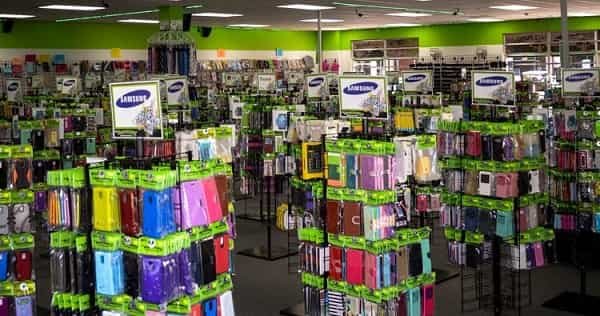
Advantages of Phone Accessories Business
1. Massive and Rapidly Growing Market
India’s smartphone base growing at 15–20% annually creates continuously expanding demand for accessories — every new smartphone sold represents potential accessory purchases for cases, screen protection, chargers, and earphones. The device replacement cycle — Indians upgrade smartphones every 2–3 years — creates fresh accessory demand with each upgrade as new phone models require new-fit cases and compatible accessories. This self-renewing market foundation ensures consistent demand growth without requiring market creation effort from accessories businesses serving the device base’s natural expansion.
2. Very Low Startup Investment
A basic phone accessories retail business can be started with ₹50,000–₹1,50,000 in initial stock — covering a representative range of popular cases, screen guards, chargers, and earphones for most-demanded smartphone models. Online selling through Flipkart, Amazon, and Meesho requires even lower initial investment — listing products from a small stock holding without requiring retail premises investment. This minimal entry cost makes phone accessories one of India’s most accessible electronics retail businesses, suitable for first-time entrepreneurs with limited capital and interest in the smartphone ecosystem.
3. High Demand Frequency and Repeat Purchases
Phone accessories are consumed and replaced regularly — screen protectors crack and require replacement, cases wear out or become unfashionable, chargers fail from daily use, and earphones experience cable and speaker damage within months of purchase. This regular replacement demand creates repeat customer relationships without requiring the aggressive new customer acquisition that businesses serving infrequent purchases depend on. A customer who purchases a case from a trusted source returns within 3–6 months for the next accessory requirement — creating natural repeat revenue from satisfied buyers without additional acquisition investment.
4. Multiple Sales Channels
Phone accessories generate revenue through multiple simultaneous channels — retail shop walk-in customers, online marketplace listings, wholesale supply to smaller retailers, bulk corporate supply for employees requiring accessories, and increasingly Instagram and WhatsApp direct selling for premium branded accessories. This channel diversity provides both revenue stability and growth pathways that single-channel businesses lack. Building simultaneous online and offline presence maximises market reach from the same inventory investment — allowing the business to serve convenience-seeking online buyers and immediate-need walk-in customers from a single stock base.
5. Private Label and Brand Building Opportunity
Beyond trading in established accessory brands, entrepreneurs can develop private-label phone accessories — branded cases, designer screen guards, and premium charging cables that differentiate from commodity products and command price premiums. Online-first private label accessory brands have demonstrated extraordinary growth potential in India — brands like Ambrane, Portronics, and Belkin have built significant businesses in the accessories space by creating brand identity around quality and design. Building an accessories brand requires consistent quality management and marketing investment but creates margin advantages and customer loyalty that commodity trading cannot achieve.
Disadvantages of Phone Accessories Business
1. Rapid Product Obsolescence
Phone accessories are tied to specific smartphone models — cases designed for Samsung Galaxy S23 become obsolete when Samsung launches the S24, with retailers holding unsellable old-model stock that cannot be returned or repurposed. Managing inventory across dozens of phone models, each with model-specific accessories, requires sophisticated stock management to avoid obsolescence losses. The pace of new phone model launches — major manufacturers release multiple new models annually — creates continuous inventory planning challenges that require constant market monitoring and disciplined procurement to manage without significant dead stock accumulation.
2. Intense Competition and Price Pressure
The phone accessories market is among India’s most competitively dense retail segments — thousands of physical shops, millions of online seller listings, and powerful established brands all compete for the same consumer spending. Chinese manufactured accessories available at extremely low prices through wholesale and direct import channels create persistent downward pricing pressure on standard accessories. Building differentiation beyond price — through quality guarantee, personalised service, curated selection, or brand identity — requires investment that commodity competitors avoid by competing purely on lowest price.
3. Quality Consistency and Counterfeit Risk
The phone accessories market has significant counterfeit and sub-standard product issues — fake branded chargers, imitation cases sold under established brand names, and sub-specification earphones create both consumer safety risks and regulatory compliance concerns. Sourcing from verified, quality-consistent suppliers requires procurement discipline and supplier relationship investment. Counterfeit branded accessories create legal risk for retailers who unknowingly stock them — making supplier due diligence an essential business practice rather than an optional quality preference.
4. Working Capital Management Complexity
Managing inventory across multiple phone models, accessory categories, and price points requires substantial working capital investment — particularly for businesses attempting to maintain comprehensive in-stock availability that customers expect from established retailers. Capital tied up in slow-moving old-model accessories represents inefficient working capital deployment. Balancing adequate stock depth in fast-moving models against the inventory risk of over-purchasing before new model launches requires procurement sophistication that new entrants consistently underestimate — frequently resulting in either stockouts that disappoint customers or dead inventory that ties up capital unproductively.
5. Platform Commission and Margin Erosion
Online marketplace selling — while providing access to millions of customers — extracts commissions of 8–18% on gross sale value that directly reduce effective margins from already competitive price points. Platform fees, shipping costs, return handling, and customer acquisition investments within marketplace environments collectively reduce online selling margins significantly below offline retail equivalents. Building sufficient brand recognition and direct customer relationships to reduce marketplace dependency requires sustained digital marketing investment that adds to operating costs during the brand development phase.
Frequently Asked Questions (FAQs)
Q: Is phone accessories business profitable in India?
A: Yes — a well-managed accessories business with strong online presence and private label products achieves net margins of 20–35%. Pure commodity trading on marketplaces achieves thinner margins of 8–15%.
Q: How much investment is needed to start phone accessories business in India?
A: An online accessories business starts at ₹50,000–₹1,50,000. A retail shop requires ₹2–5 lakhs for stock, shop fit-out, and display. A wholesale operation requires ₹5–15 lakhs working capital.
Q: Which phone accessories sell best in India?
A: Mobile cases, tempered glass screen protectors, charging cables, TWS earphones, and power banks consistently generate India’s highest phone accessories volume across all price segments.
Q: Can phone accessories business be done from home online in India?
A: Yes — online selling through Amazon, Flipkart, and Meesho from home is entirely viable and is how many successful accessories businesses began before expanding into physical retail or wholesale.
Q: What licences are required for phone accessories business in India?
A: GST registration, shop and establishment licence for retail operations, and BIS certification compliance for electrical accessories including chargers and cables are primary requirements.